Showing posts with label Historical Fiction. Show all posts

April 26, 2025

Two Junior/Children's Novels: The Incorrigible Children of Ashton Place and Number the Stars

 You guys know that I like to read children's lit.  I love the straightforwardness of it, the speed of plot development, and the immediacy of any action from the characters.  Children's authors know their audience has a shorter attention span than many of their elder counterparts...

...so what's my excuse?


The Incorrigible Children of Ashton Place: The Mysterious Howling, by Maryrose Wood

Earlier this year, I recalled a series of books that a friend had recommended for my daughter, The Incorrigible Children of Ashton Place: The Mysterious Howling, by Maryrose Wood.  (What a name!  What a title!)


I must confess, the language the author uses is fairly highbrow for younger readers but, after a short period of acclimation, clever kids can handle it.  Without divulging too much, we begin this first novel of the series (of six books, I believe) with our protagonist, young Miss Penelope Lumley, who has just left her beloved school behind to become the governess to three children at Ashton Place.  Only it seems that these children are not ordinary in the least; they are positively feral.  As Penelope seeks to both teach and understand these "incorrigibles", she begins to discover that it is not only their past that is entirely mysterious, but that Ashton Place itself holds a treasure trove of secrets.

I listened to this novel as an audiobook rather than reading a hard copy.  What a treat!  Upon finishing it, I immediately placed the five subsequent titles in the series under my "To Read" tag on Libby (my preferred library app).  The mystery, humor, colorful language, and premise itself are sure to delight readers (or listeners) of any age.


Number the Stars, by Lois Lowry

Many, many years ago -some time in the late 90s- I read the book Number the Stars, by Lois Lowry.  This 1990 Newbery Award Winner didn't disappoint when I read it then, and it certainly didn't disappoint when I re-read it this past winter.


Lois Lowry masterfully crafts a concise -yet very poignant story- based on the life of a fictional young Danish girl named Annemarie.  Our heroine is growing up in Denmark under Nazi occupation.  The German soldiers situated all around her neighborhood are intimidating, often bullying those they stop to "question", so Annemarie and her sister have been instructed to avoid them as much as possible.  It isn't until Annemarie's Jewish best friend Ellen catches their attention that things get too close to home.

A fictional retelling of the Danish resistance's success in smuggling nearly the entire population of Jewish citizens out of the country to Sweden, Number the Stars is a story that lingers for its veracity.  I don't wish to ruin the ending for you, but the absolute ingenuity of this silent resistance is nothing short of incredible.  A short novel, yes, but one that reminds us that humanity can indeed be found anywhere.


Two great books for the kids in your life, but certainly don't let them have all the fun.

Happy reading!


March 29, 2025

Death Comes to [all the places], by Catherine Lloyd

Summer 2023.  I casually picked up a copy of Death Comes to Kurland Hall for less than $1 at my local library's used bookstore.  After I began reading this book, I realized that it was the third in a series of eight.  No matter, it was a simple read -a hot dog book- and the context of the characters in the story was well explained.  It's the type where you could start in the middle of the series and not be too lost.

Later that year, I picked up the next book in the same series, Death Comes to the Fair.  Same story of a purchase for chump change at the library bookstore.  After reading this fourth installment, I figured that would be enough for me - no need to continue the series.

Fast forward about a year, to fall 2024.  I decided, what the heck?  Let's just read the entire series.  They're easy enough and I enjoy them.  So I read the first book, Death Comes to the Village.  I was planning to have surgery and knew I'd be laid up for awhile...might as well enjoy my forced convalescence with the rest of the hot dogs.


I actually ended up having two surgeries since last fall, giving me enough time to finish the series.  And although I started with books #3 and 4, I went back and read them in order: #1, 2, (skip 3, 4) 5, 6, 7, 8.  They are as follows (complete with links to my previous reviews):

#1. Death Comes to the Village

#2. Death Comes to London

#3. Death Comes to Kurland Hall 

#4. Death Comes to the Fair

#5. Death Comes to the School

#6. Death Comes to Bath

#7. Death Comes to the Nursery

#8. Death Comes to the Rectory


This post will review books #2 and #5-8.

While I could individually write up a review for each of the remaining five novels in the series, I feel that would be redundant.  To be completely honest, my reviews for every book in this series of eight would be nearly identical, checking every one of the following boxes:

  • Quintessentially English
  • Rainy
  • Presence of sheep
  • Bonnets
  • Dressing for dinner
  • Someone gets murdered
  • Usually a second murder takes place that is linked to the first murder
  • Subterfuge of non-murderers-but-still-characters-with-something-to-hide
  • Mention of spectacles
  • More bonnets
  • Copious amounts of tea and brandy
  • Portly gentlemen
  • Bad editing and a plethora of typos (e.g. A character in one book is named Marjory, but sometimes her name is spelled Marjorie.  It flip-flops back and forth throughout the book.)
  • Pampered bitches with delusions of grandeur
  • Sensible shoes
  • So many goddam bonnets
  • Horses
  • Dogs
  • Ale
  • Potatoes
  • And more...
While the books become steadily more predictable, I truly did not mind.  They are an easy escape from the mundane, a welcome way to pass the time, and have no pretensions at being great works of literature.  Each one is a story within itself, though reading them in order certainly is preferable for inter-novel character development.  Certainly there is action and murder, but without being overly grotesque or gratuitous, making this -The Kurland St. Mary Mystery Series- the perfect "cozy mysteries" for fans of the genre.  

Hot dog books to the max.

March 18, 2025

A Lack of Temperance, by Anna Loan-Wilsey

Once upon a time, I branched out by picking up a murder mystery novel by a different author.

I know.  It happened.

I am finishing up a series of "hot dog books" by a particular author (collective review forthcoming) but, while at the library, I came across a new series that takes place largely in the American Midwest.  As a Midwesterner, I recognize a lot of these places, and my own hometown is briefly referenced a couple of times in the novel.  (Fame, here we come!)


Author Anna Loan-Wilsey also writes under
the nom de plume Clara McKenna. 
This is the same person/novel.


Anyway, the first novel in the Hattie Davish Mystery Series takes place in turn-of-the-century Eureka Springs, Arkansas at the height of the Temperance Movement.  For those not familiar with this bit of history, the Temperance Movement was a predominantly woman-led ideology that villainized liquor of all kinds, citing its abuse as the cause for violence, sloth, domestic problems, and a laundry list of other sins.  While much of this was (is) indeed legitimate, the Women's Christian Temperance Union (WCTU) sought to legally outlaw liquor, shut down saloons and other alcohol-serving establishments, and prosecute anyone breaking the laws they wished to enact.  Sometimes, these ladies (and occasional gents) got rather zealous and even (quite ironically) violent.  The Temperance Movement certainly marked an interesting period of American history, although it must be said that the WCTU actually exists to this day.  

Funnily enough, I came across a great podcast episode about the WCTU after reading this book and realized that the murder victim of the novel (Mother Trevelyan - don't worry, this isn't a spoiler) is clearly based on a major player in the WCTU, right down to her hatchet wielding fervor.  Carry A. Nation -aka the "Hatchet Granny"- was a radical leader of the Temperance Movement, who relished destroying saloon property.  (If you choose to listen to this episode of An Old Timey Podcast, please suspend any sense of prudeness and just enjoy it.)  

A strikingly similar scene at the beginning of A Lack of Temperance serves as an introduction to the murder victim.  But Mother Trevelyan isn't the protagonist!  That would be (wait for it) Hattie Davish.  This is the first of the Hattie Davish Mystery Series after all.  Anyway, directly from the dust cover:


"On the eve of the heated presidential election of 1892, Miss Hattie Davish arrives in Eureka Springs, Arkansas, a scenic resort town where those without the scent of whiskey on their breath have the plight of temperance on their tongues. Summoned for her services as a private secretary, Hattie is looking forward to exploring the hills, indulging her penchant for botany—and getting to know the town’s handsome doctor. But it’s hard to get her job done with her employer nowhere to be found . . .


An army of unassuming women wielding hatchets have descended on the quiet Ozark village, destroying every saloon in their path—and leaving more than a few enemies in their wake. So when their beloved leader, Mother Trevelyan, is murdered, it’s easy to point fingers. Now that she’s working for a dead woman, Hattie turns to her trusty typewriter to get to the truth. And as she follows a trail of cryptic death threats, she’ll come face to face with a killer far more dangerous than the Demon Rum . . ."


Not highbrow, but still a lot of fun...if one goes in for that sort of thing.  I imagine I'll check out the second book in the series at some point, though it isn't a priority.  A perfect distraction from life and a diverting, easy read...especially when paired with a cocktail. ;)


Cheers!

January 29, 2025

2024 Wrap-Up: A record breaking 7-in-1 post

 I got lazy toward the end of 2024.  Part of it was that I had surgery in October, then still did all the usual year-end things...and I was just tired.  Being laid up, however, provided ample time for reading -- so read I did.  Because I am barraging you with seven new titles, I decided to group them by category.  You know how I love categories.

CHILDREN'S NOVELS

My daughter is always complaining about having "nothing to read" (false).  As a result, I have gone back into the deep recesses of my memory to dig up some of the books that I read and enjoyed around her age (give or take a couple of years).  Here are a couple that she read -and I re-read- in the final weeks of 2024.

Stepping on the Cracks, Mary Downing Hahn

I was fortunate as a child to have an older sister who was an avid reader.  This meant that she would often read books and then suggest the good ones to me, essentially weeding out the boring shit.  Stepping on the Cracks was one such "good book" that she recommended to me when we were kids.


The story is set stateside during WWII.  Two young girls -best friends Margaret and Elizabeth- both have older brothers fighting overseas, and know firsthand how war can affect a family.  Still, they are pre-teenage girls and war certainly doesn't occupy all of their thoughts.  In fact, the merciless sixth grade bully Gordy Smith and his cronies are more prevalent in their day-to-day lives.  In a scheme to exact revenge upon Gordy and his friends for their latest antics, Margaret and Elizabeth make a startling discovery that will change the way they think of their neighborhood as well as the world -and the war- around them.

Stepping on the Cracks is a simple but poignant coming-of-age story.  While most of us didn't live through WWII, we can relate to the youthful goings-on of the protagonists.  Re-reading this book as an adult was no less exciting, but certainly afforded me the opportunity to experience it through a different lens.  As an adult and a mom, I related to characters that I hadn't previously considered.  Well worth the re-read.

Cat Running, Zilpha Keatley Snyder

Another period-piece-lessons-learned novel that both my daughter and I enjoyed is Cat Running.  This story, set in California during the 1930s, features another sixth grade girl as the main protagonist.  Cat Kinsey is frustrated by her traditional parents -specifically her father- who will not allow her to "wear slacks" like the other girls at school.  It's not just the mandatory dresses that annoy Cat, but the fact that she is a very talented runner and wants so badly to defend her title in the school's annual running/track competition...but being unable to dress in a way that is conducive to her goals (and being a tweenage girl with an out-of-touch parent) makes that extremely difficult and frustrating.


As a salve to her rage, Cat discovers a strange little hideout in the rocky cliffs beyond her family's property.  As she sets up shop in her new secret place, she discovers that she is not the only one who frequents it...and a strange new friendship develops that might just change her life.  Fun, informative, and thought-provoking, Cat Running is a great story for the junior reader in your life.

MURDER MYSTERIES (A.K.A. "HOT DOG BOOKS")

Y'all, I'd be remiss if I didn't have at least one (or three) murder mysteries in my 7-in-1 post.  They need no introduction, so I'll just get started...

Miss Morton and the Deadly Inheritance, Catherine Lloyd

Devotees (ha!) will recall a series that I began in 2023: the Miss Morton books by Catherine Lloyd.  Deadly Inheritance is the third book in this series and follows the same format as the first two:  Miss Morton and the English House Party Murder and Miss Morton and the Spirits of the Underworld.  Honestly, I don't feel like it merits a full review because it's just the same formula.  It's predictable, fun, and I don't care what you say, I'm going to keep reading them.


Death Comes to the Village, Catherine Lloyd

Prior to the Miss Morton books, Catherine Lloyd penned a series of Death Comes to ____ books, featuring a practical, similarly minded leading lady:  Lucy Harrington.  Once again, "devotees" (double ha!) will recall that I began this series back in 2023, but unknowingly started with #3 of an eight book series.  (Previously read: #3 Death Comes to Kurland Hall and #4 Death Comes to the Fair.)  Since I've been doing a lot of hot dog reading in my convalescence (gearing up for another surgery next week...), I figured I ought to go back and start this series from the beginning with #1 Death Comes to the Village, and work my way through this series (skipping #3 and #4).  So far, same song and dance: fun, mindless, love mine with mustard and relish.


Vera Wong's Unsolicited Advice for Murderers, by Jesse Q. Sutanto

In a surprising turn of events, I left England's murdery countryside and landed in present day San Fran's Chinatown.  Stereotypical tiger mom Vera Wong runs a little tea house where nothing exciting happens...until one day, a man's body is discovered right in the middle of her shop.  Of course, the police department isn't up to snuff, so Vera must take over the investigation herself so that things will be done correctly.  As she continues her detective work, Vera finds herself cozying up to a laundry list of suspects, all people who knew the deceased.  What she doesn't expect is to find herself caring deeply for these people, their lives, and their well-being.


My husband and I listened to this book together (vs reading it in print) and, let me just say, we fully enjoyed it.  It was funny, suspenseful, and heartwarming -- a rare combination.  I would recommend Vera Wong to anyone who might enjoy a fun escape, particularly accompanied by a good cup of Chinese tea.  (Bonus:  Vera will be back in another novel set to release in March!)

MISCELLANEOUS (FANTASY + SHORT STORY)

The final two entries for this post fall into two separate categories.

Taliesin, by Stephen Lawhead

Last year, I listened to a Stephen Lawhead book In the Hall of the Dragon King.  It was OK, kinda contrived, not my favorite.  Still, I mentioned in that review how I wanted to try another couple of Lawhead's books/series, so I did.  Taliesin is the first in The Pendragon Cycle, a series featuring a cast of Arthurian characters.  


An epic build up to what is certain to be quite the universe, Taliesin spans perhaps an entire continent between Atlantis (a kingdom in its twilight) and a post-Roman Celtic world (that sounds a lot like Wales) that is on the rise.  Worlds collide, characters meet, years pass, and loved ones are lost or changed.  It's all the things that a fantasy prequel promise to be.  Nevertheless, I did find a lot of contrived action similar to that which I detailed in my review of Dragon King.  There were elements that were simply too forced for my liking, as well as a lot of "by the way" information crowded into the final chapters.  While it wasn't a bad read, per se, I will not be likely to pick up the second book in the series.  

The Turbulence Expert (from You Like It Darker), by Stephen King

My husband is a long time fan of Stephen King.  In fact, I believe he has read everything the guy has written.  (If not, it's pretty damn close.)  One of King's latest publications is a series of short stories in the book You Like It Darker.  


My husband hates flying; he hates heights.  As such, he related a great deal to the main character in the short story The Turbulence Expert from this collection and prompted me to read it, since I know these details about him.  Without divulging too much, the main character in the story shares my husband's fears, making him a perfect fit for a (fictional???) job as a "turbulence expert".  And that is all I'll say.  A fun and eerie read that will take you only a matter of minutes.


And that concludes 2024!  I've already made considerable progress in 2025 and am about to wrap my fourth book.  I will probably be back to review throughout the year, but I make no promises at this time!

HAPPY READING!!!


October 28, 2024

Historical/Gothic Fiction with Hester Fox

 In previous posts, I have reviewed books by the contemporary author Hester Fox.  Fox tends to gravitate towards gothic fiction, often set in the 19th century.  For previous posts on her works, click the links below:

The Witch of Willow Hall (2018)

The Widow of Pale Harbor (2019)

A Lullaby for Witches (2022)

The Last Heir to Blackwood Library (2023)

Over the past month or so, I read the remaining two (current) publications by Hester Fox.  To be honest, I really didn't love either one.

The Orphan of Cemetery Hill (2020)


Y'all, this book was B-A-D.  The characters were dull, the plot was preposterous, and the denouement was non-existent.  The main character is a young woman by the name of Tabitha Cooke.  Tabitha can commune with the dead, but this fact must remain a secret so that people don't take advantage of her.  She is impoverished and an orphan, separated from her older sister -who can see the future- during her childhood.  When Tabitha's friend's fiancée is murdered, he is suspect #1.  Of course, he didn't kill his lovely bride-to-be and Tabitha knows this, since she talked to her ghost.

And it just goes downhill from here.  But I still read it.  Shame on me. 

The Book of Thorns (2024)


Hester Fox's most recent publication is tepid, at best.  Two sisters were separated so early in childhood that neither of them actually recalls having a sister.  However, a bond they share -a gift their mother also had- is their ability to commune through and with flowers.  During the Napoleonic wars, older sister Cornelia is working with the French army as a healer.  Younger sister Lijsbeth is mostly mute, and works as a housemaid for a wealthy family in Belgium.  On opposing sides of a war, the sisters reconnect with each other, learn about their past, and are able to piece together their futures.  In Hester Fox fashion, it is contrived and (mostly) predictable.  I also found it annoying how hard she clearly worked to get a f/f/m love triangle worked into the plot.  It felt forced and did not add one iota of excitement to the story.  While I won't say it was her worst book, I'd rate it slightly below average.

If you asked me today to rank these books, I would probably do so as follows:

  1. The Last Heir to Blackwood Library
  2. The Widow of Pale Harbor and/or The Witch of Willow Hall **
    **Caveat being the first scene of the book where a cat is hurt.  Hated that.
  3. A Lullaby for Witches and/or The Book of Thorns
  4. ----
  5. ----
  6. ----
  7. ----
  8. ----
  9. ----
  10. ----
  11. The Orphan of Cemetery Hill
Hester Fox will be releasing another book in 2025.  I'm eager to read it and rank it here for you!

Unfinished Business: Books I did NOT complete

 It isn't often that I will start to read a book and make the decision not to complete it.  Even if it's not great writing or the characters suck, I'm too stubborn to put it aside.

Except that I did just this three times in the past few months:

A Play of Piety, by Margaret Frazer

After reading the first few chapters of this book, I was just. so. bored.  I wanted to like it.  I tried to like it.  I just couldn't get into it.  Furthermore, I was not remotely invested in the characters and, looking ahead, I happened upon a scene where a dog is killed.  It's a merciful death, but still sad.  Pass.


Jacob Have I Loved, by Katherine Paterson

This book started off strong.  Paterson's narration is both pleasing and easy to read.  I enjoyed her exposition through the pathetic first person narrator about things from seasons to food to jealousy.  However, about halfway through the book, one of the worst scenes I've encountered in literature presented itself.  This scene is graphic, inhumane, and abhorrent.  I found myself wishing I could strangle Paterson myself for putting these pictures in my head and now, without hesitation, I can say that I hate both her and her work.  And her main character -the one with whom readers are meant to empathize- is a spineless, brainless, piece of excrement.  No wonder everyone loves her sister and simply tolerates her.  She sucks.  HARD PASS.

Tales of King Arthur, by Sir Thomas Malory,
Edited and abridged with an introduction by Michael Senior


I've read a number of Arthurian legends.  I've known many of the stories for years and years but it wasn't until I was in a French literature class that I actually read my first original work.  We read Le Chevalier au Lion (The Knight with the Lion) by Chretien de Troyes.  On each two-page spread of the text were the old, original French (left page) and the updated, modern French (right page).  With a sort of dual-language book like this, we could not only read the story, but compare and contrast the current words with the original.  It was one of my first novels in French and that fact, coupled with the type of lyrical writing even of the modern translation, made reading the story of Sir Yvain as a knight errant rather cumbersome.  Nevertheless, we carried on.  I had also read -in both English and French- the story of Tristan et Yseut (Tristan and Isolde), along with numerous other adaptations of different stories of Arthur and his knights.

While I do love the adventures and the kickass stories themselves, after awhile, they start to drone on.  Malory is very very wordy, and his characters are quite flat.  For instance, Arthur is always perceived as a hero...even though he casts a ship full of babies out to sea, leaving them to die in case one of them is his repudiated son Mordred.  Sorry, Art, but that's not a redeemable act.  Merlin coerces a teenage girl into doing...things with him and, when the bill finally comes due (read: she enacts her own justice), she is the one painted as a villain while poor Merlin is victimized.  Barf.  Morgan le Fay is, as always, portrayed as a toxic malevolent when, let's get real, it was Arthur's birth father (Uther Pendragon) who killed her father, forced her mother to marry him, and then was a general asshole.  Maybe Morgan is nasty, but she's got her reasons.  All in all, the more I read of King Arthur, the more I tend to empathize/sympathize with the alleged bad guys.  You might say that the writings are "of their time", but I am also of my time.

This edition of Sir Thomas Malory's accounts is a great start for readers new to the Arthurian legends.  It's a challenging read, but simplified in order to appeal to a modern reader without having to do too much research or investigating.  In fact, that is exactly what Michael Senior (editor) intended: to create a loyal rendition of Malory's work that is also pleasing to read.  I would say he accomplished his mission; I just simply could not read the entire thing cover to cover without breaks to read other stuff.

Three books - each unfinished.  I have to remind myself when I pick up a book that I am under no obligation to finish it.  Sometimes, you just don't, and that's OK.  I've moved on since then, even finishing a couple of other books in the meantime.  Stay tuned for more reports on books that I have completed.

October 1, 2024

Witches, Witches, Everywhere! (A NEW 4-in-1 post)

Four books.  I'm writing about four books.  This is a new multiple book post record!  But I felt that these books were appropriate to put together as they all revolve around a similar theme.  Since we are approaching Halloween, what better time to talk about...


...witches!!!

Three of these four books are by the author Hester Fox, whom I mentioned in a previous post that included her 2023 novel The Last Heir to Blackwood Library.  After reading several more of her works, I can see that Ms. Fox most definitely follows a formula and, so far, always in the genre of gothic historical fiction.  While her stories are not what I would consider particularly highbrow, nor do they stick with you after the final page, they are certainly entertaining.  And sometimes, that's just what you need.  (Hot dog books, am I right?) If you go into one of her novels with this mindset, you might find yourself swept up in a dark, broody past, typically set in mid-19th century New England (Blackwood Library being the one exception among those that I've read thus far).

Anyway, the first of these witchy novels that I'd like to talk about today is Hester Fox's debut book:

The Witch of Willow Hall

After a series of damning rumors destroy the reputation of the Montrose family, sisters Catherine, Lydia, and Emeline -along with their parents- find themselves moving from Boston to the small town of New Oldbury, Massachussetts.  Set in the early 1820s, the Salem witch trials are a thing of the past...but not forgotten.  As Lydia (our main protagonist and first person narrator) begins to notice strange things around the country estate, things take a supernatural turn.  Lydia eventually discovers her family's dark secrets and scandals but, most of all, she learns that certain traits -and abilities- run in the family.


I hated how this book opened.  Like, HATED IT and almost refused to read it any further than the first few pages.  People who know me understand one thing very well:  I do not abide animal cruelty.  In any form.  I don't tolerate it in books, TV, movies, anything.  The animal can end up fine but, if you're a storyteller and you put an animal in distress, then I'm simply no longer interested in anything you have to say as a writer or as a human being.  As such, you can imagine my disappointment when the story opened by describing -in moderate detail- an event taking place where my favorite animal was killed.  While I understand Hester Fox's use of this event to illustrate the goodness in the main character (who absolutely loses her shit at this loss of a beloved pet), I do not appreciate it.  ONE HUNDRED THUMBS DOWN FOR THIS, MS. FOX!

In a very uncharacteristic act, I continued reading.  I don't know why I did, but I did so with caution.  I knew that if one more animal got hurt, I'd be done.  (That was it, by the way.)  However, the book was filled with a number of other triggers that, for people like me, can be quite problematic.  [At the risk of spoilers, readers beware:  A baby dies (possible miscarriage).  A child dies (actually, two kids die).  There are some mildly graphic mentions of hangings and house fires.  There is consensual incest.]

Ew.  Come to think of it, why did I like this book?

OK, so some weird and gross shit happens.  It was the 1800s, man!  People were weird AF!  But there was a lot of action in the book that did not fall under any of these categories and was not gross.  I just felt compelled to share some common triggers with y'all.

"It was the 80s, man!  I told you, the 80s was a wild place."

Personally, I love the theme of witchcraft.  When I say witchcraft, I'm not referring to the dark arts or sinister practices, rather to the idea of women asserting power when and where they can.  Imagine growing up in a world where you had no voice, your only purpose was to make a good match (hoping he wasn't an asshole), serve your husband, procreate, and keep it tight.  Your entire existence was subservient, reading novels was frowned upon and led to mental distraction, your appearance indicated your level of sanity (looking disheveled being the equivalent of insanity), and you were so tightly buttoned up -both literally and figuratively- that any misspoken word could destroy your reputation.  All this while your bones are being contorted in tiny, pointed shoes and your lung capacity diminished in disfiguring corsets.  It's no wonder we all got the vapors!

But there is something about witchcraft that reasserts a level of power.  Think about the symbols of witchcraft:  an understanding of nature and herbs (in a cauldron?) to heal and soothe, a broom to maintain cleanliness of a space, a cat to chase the mice away (still thinking hygiene, not to mention companionship), a connection to other women and their shared wisdom.  That's witchcraft.

Ultimately, it is this sort of witchcraft that is wielded in this book.  Generations of women, passing down their compassion, wisdom, and understanding to their daughters, granddaughters, and beyond.  Isn't that a lovely thought?

But yeah.  Some spooky and gross shit happens too.

A Lullaby for Witches

I'm just going to include the description for this book from it's Amazon page because I could do no better:

"Two women. A history of witchcraft. And a deep-rooted female power that sings across the centuries.

Once there was a young woman from a well-to-do New England family who never quite fit with the drawing rooms and parlors of her kin.  Called instead to the tangled woods and wild cliffs surrounding her family’s estate, Margaret Harlowe grew both stranger and more beautiful as she cultivated her uncanny power. Soon, whispers of “witch” dogged her footsteps, and Margaret’s power began to wind itself with the tendrils of something darker.

One hundred and fifty years later, Augusta Podos takes a dream job at Harlowe House, the historic home of a wealthy New England family that has been turned into a small museum in Tynemouth, Massachusetts. When Augusta stumbles across an oblique reference to a daughter of the Harlowes who has nearly been expunged from the historical record, the mystery is too intriguing to ignore.

But as she digs deeper, something sinister unfurls from its sleep, a dark power that binds one woman to the other across lines of blood and time. If Augusta can’t resist its allure, everything she knows and loves—including her very life—could be lost forever."


Unlike the witches in The Witch of Willow Hall, we encounter a darker force in the sequel-ish novel A Lullaby for Witches (also by Hester Fox).  Of the books I've read by this author (to date), this one is my least favorite.  The concept was intriguing, but the characters were bleh.  Ultimately, the plot felt contrived and the conclusion was forced.  I did like the main characters' connections to the Montrose family from The Witch of Willow Hall, but it fell short in most every other way.  In fact, it was so unmemorable that I'm done talking about it.

The Widow of Pale Harbor

In yet another novel by Hester Fox, we encounter the idea of witchcraft, but in a non-magic sort of way.  None of the characters in this book possess any actual powers, although rumors swirl in accusation of such wickedness.  

Set in the sleepy, idyllic town of Pale Harbor, Maine, we meet the newly bereaved Gabriel Stone, a widower intent on honoring his late wife's wishes of spreading the transcendentalist movement.  While Gabriel doesn't particularly believe in transcendentalism himself, his wife was passionate about it and, feeling a sense of guilt at her death (childbirth), he feels compelled to do something for her.  It's weird and far-reaching, but people do weird things for grief, I guess.

Meanwhile, the spooky, witchy widow Sophronia Carver ("She has a tail!") is living alone up at Castle Carver (not a castle, just a bigass house) with only three discreet servants to help her.  The entire town suspects Sophronia of having killed her late husband, a well-respected businessman and magazine editor, whose cosmopolitan appeal charmed the residents of the small town.


Remember how I said Hester Fox had a formula?  It applies here, too.  But please also remember what I said about that:  "While her stories are not what I would consider particularly highbrow, nor do they stick with you after the final page, they are certainly entertaining. [...]  If you go into one of her novels with this mindset, you might find yourself swept up in a dark, broody past, typically set in mid-19th century New England" (source: me).

Just like the premise for the character of Gabriel Stone, the entirety of this book is far-reaching from a critical standpoint.  But, these unbelievable prompts are what propel the plot (alliteration!) and allow for readers to be entertained.

Finally, in a deviation from Hester Fox, I have one more book about witches.

The Girl and the Witch's Garden

This final book centering on witches is nothing like the previous three.  In fact, this is a children's novel by author Erin Bowman.


When young Piper Peavey's father is diagnosed with cancer, she is sent to live with her estranged  mother and distant grandmother at the mysterious Mallory Estate.  Upon arriving, Piper learns that her mother has taken in a number of other children -all with magical abilities- while neglecting her own daughter.  Frustrated at her mother's apparent enthusiasm for her foster kids, Piper becomes hurt, jealous, and determined to figure out what is behind the strange happenings at Mallory Estate.

I was honestly drawn to this book by the cover art.  Isn't it charming?!?!?!?!  I love the illustration (especially the cat) and thought that my own daughter might enjoy the book, so I checked it out from our local library.  At the end of the story, she and I agreed: although it wasn't a particularly memorable read, it was (like those of Hester Fox) entertaining for the duration.  It's about the ride, right?

Clearly drawing from more classic children's literature (think: Harry Potter, The Secret Garden, etc.), The Girl and the Witch's Garden is a charming read, even for adults.  Themes of loss, grief, friendship, belonging, and family are all included in this story of the main character and her discoveries.  (Of note:  There are some potential triggers in this book as well including, but not limited to abuse, neglect, loss of a parent.)


Four different books, mostly enjoyable, all featuring something pertaining to witches.  Happy reading and HAPPY HALLOWEEN!


August 13, 2024

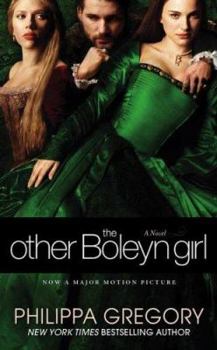
The Other Boleyn Girl, by Philippa Gregory

When I was finishing college, a movie based on a book came out starring The Hulk, Thor's girlfriend, and Black Widow in Tudor England.  I ask you, what about that statement is not extraordinary?


It's true, of these three Marvel wonders, only Hulk (2003) had actually come out by the time this film adaptation of The Other Boleyn Girl (2008) was released.  But the book, which is what we're here to discuss today, was published in 2001, prior to any of these box office releases.

European history has always held a sort of fascination for me.  I remember learning of Henry VIII and the rhyme involving his six wives when I was in 7th grade social studies class: "divorced, beheaded, died, divorced, beheaded, survived".  Any asshole who straight up murders his family and changes a nation's history, religion, and politics to better suit his sex life is a narcissist who leaves a mark on your brain.  Anyway, I started this whole pointless anecdote with my being in college...I saw a friend of mine on campus one day reading this book, and I found that I was jealous.  With my areas of study (French, English, Art History), my reading time was swallowed up by required texts for an array of classes.  (Side note:  the French lit that was mandated was ALWAYS BORING AND WEIRD AF.)  By the time I'd finish one book and write a subsequent paper on it, it was time for another.  Reading for pleasure was a rare treat until a semester ended.

Fast forward about 16 years and here I am!  I finally read this book and, may I say, it would have been better if the Hulk had actually been in it.

Even this Hulk...


To be truthful, the book wasn't bad.  It sparked my curiosity about a number of things, so I found myself doing quite a bit of fact checking.  Of course, it is a work of fiction and claims to be nothing else, but it does leave me frustrated when historical fiction authors deviate a great deal from accepted truth about a time, place, or person.  (Example:  Mary Boleyn being banished from court for a clandestine marriage was true.  Contrary to the book, however, I believe she was disowned by her family and never allowed to return to court.  Also never mentioned in the novel:  Anne did eventually try to make some financial provisions for her sister.)  Although it was an engrossing diversion, it did make me feel sad and disgusted by the time, place, and just about every person.  

For instance...

Henry VIII - I don't feel like I need to say much about why this guy was awful.  Narcissistic, self-involved, and just straight up gross.  He thought he was sly in the way that children think that if they cover their eyes, they become invisible.  He couldn't keep his pants on and murdered people who didn't suit his baser desires.  Plus he liked hunting and bear-baiting, so clearly a sociopath.

Boleyn and Howard families - There is nothing wrong with being ambitious, so long as one's ambitions are in check with reality.  The Boleyn and Howard families (Howard being Mary and Anne's maternal family surname) thought nothing of sacrificing their daughters' well-being -and LIVES- for their own monetary and social gain.  You'd think they would have learned from the executions of Anne and George (two out of three of their CHILDREN!!!) that ambition in the Tudor court is a dangerous game, but they did not.  In fact, it was Catherine Howard (a relative of Anne's) who was the other "beheaded" of Henry's gruesome lineup of wives.  Seems that the Boleyns and Howards have a theme.  Were they apologetic?  It wouldn't appear so...

Mary Boleyn - It's easy to judge through a modern lens, but she just seems whiny and pathetic - at least in the book.  Still, if the novel is based on any measure of fact, her abuse and/or neglect began at a young age, and people do weird things when subjected to cruelty and childhood marriage.  The ultimate reality of Mary Boleyn's life is just that it was sad.

Anne Boleyn - According to the novel, she was a total bitch.  I wonder if any of this portrayal is accurate.  Maybe so.  History certainly considers her cunning and willing to angle, but I'm curious to what extent she abused her relationship with Mary in real life.  For example, quick research will reveal that Anne did not steal-adopt Mary's son from her (naughty), rather provided for his education as her ward (nice).  There's a difference.  I'm unable to tell if Anne ever used Mary's children as pawns in her schemes, but there doesn't seem to be any real evidence of that happening.

Catherine of Aragon - Good lord, what a sad situation.  Catherine of Aragon -Henry's first wife- appears to have done nothing to merit her treatment and ousting...beyond getting older, of course.  (For shame!!!)  The number of children she lost to miscarriage or stillbirth is heartbreaking, and certainly not her fault, but she appears to have borne the blame.  God knows what actually went on inside her head but, a devoutly religious person, to have been forced into a divorce would have upset her fervent Catholic beliefs.  Furthermore, to be denied access to her one living child (Princess Mary) is nothing short of cruel.  On top of that, Catherine was a lifelong royal.  Before becoming Queen of England, she was Princess of Spain (her parents being the Ferdinand and Isabella who funded Christopher Columbus's 1492 voyage).  For her to be ousted was, more or less, a double blow.

Princess Mary - Oh, Bloody Mary.  Honestly, her fall from favor makes her later "bloodiness" almost understandable.  As Henry's first legitimate child, she was raised as a princess.  Although her parents were mostly absent from her upbringing (typical of the time), she would likely have enjoyed their affections from afar.  Well educated, provided for, and visited from time to time, she was a standard English princess.  Of course, once Anne Boleyn entered the picture, everything changed.  She was cast off, forced to wait on her -arguably illegitimate- stepmother (Anne) and half-sister (Elizabeth).  Not only would this blow to her pride and position have humiliated her, she was then denied visitation to her one remaining ally: her own mother.  Poor Mary was even forbidden to attend her mother's funeral.  So yeah, she went a little scorched earth during her own reign as Queen of England.  Should she have been so cruel to English non-Catholics?  Certainly not.  But perhaps it was one way she felt she could exert control, and a return to her mother's staunch morals and memory.

While the novel The Other Boleyn Girl certainly does highlight each of these characters and their individual stories, it does deviate somewhat from the truth.  Of course, as historical fiction, this is to be somewhat expected.  I do feel that it does well to embody the spirit of the time and characters mentioned, if not in a wholly accurate portrayal.  We can only speculate as to who these people were beneath the bravado, but the fall from grace experienced by each one is nothing less than tragic and unnecessary.

A final note:  It is so easy to miss the human nature of historical figures.  After all, they are typically reduced to dates, facts, and a few accomplishments or failures.  Even their portraits -that really don't resemble us today- appear cold, distant, and unrelatable.  Catherine of Aragon and Anne of Boleyn were both considered beauties in their time, but paintings of them leave us (me) questioning the beauty standards of the day.  Until I came upon this...

A present-day artist took the portraits of each of Henry VIII's wives and made modern re-creations of them using AI.  The results are stunning and, to me, made me reconsider not only the beauty of these six women, but their humanity.  Somehow, seeing Anne of Cleves with a full smile or Catherine of Aragon in a Nike sports bra makes them seem like people I might know.

Six Wives of Henry VIII: Modern Recreation

August 9, 2024

Guys, I have a problem: more (murder) mysteries in a 3-for-1 post

I said it in the title and I'll say it again:  Guys, I have a problem.  I can't stop reading murder mysteries set in Great Britain.

These novels are all so contrived.  Most often, I guess the ending (at least in some capacity) before arriving at it, but I just enjoy the ride.  The character development is, if not profound, kind of fun; I like a puzzle and I like suspense.  But why are they always British?  I like tea and rain, but their food sucks and the period piece social hierarchies annoy the hell out of me.  I spent the entirety of the latest Downton Abbey movie hoping that we'd see the 1929 stock market crash so that I could watch the entitled Crawleys struggle to work and live like the rest of us.  (What can I say?  As an American, I'm born and bred to be informal and egalitarian.  I HAVE NO 'BETTERS'.)  So why do I keep gravitating to this very specific genre?

Today, I figured it out.

I'm not unique in my love of mystery novels.  There's a reason the genre is so prolific: people love it.  I'm also not unique in my interest in history and proclivity for historical fiction.  This Brit Lit often combines the two: mystery and history.  But, above all, the British mysteries towards which I gravitate are not violent.  Yes, there is violence in them (they are murder mysteries, after all), but it is never so graphic as to be difficult or gratuitous.  None of the authors whose works I've been reading go into gory details.  To add, animals rarely (if ever?) get hurt, which is a feature that I cannot/do not abide.  These are books that are easy to get lost in.  They are suspenseful without being scary.  They are safe (for the reader...not for the characters!), fun, and lend a sense of excitement to an otherwise mundane or routine day/week/month/whatever.

This past year, I have read a lot of mystery novels that I have reviewed here.  And, shameful though it may be, I don't intend to stop.  It's not the worst vice I have.  So, without further ado, here are the three most recent titles I have enjoyed:

The Hummingbird Dagger, by Cindy Anstey

In 1833, a young woman is found unconscious after a carriage accident outside a small village.  When she awakens, she has no memory of who she is or how she arrived at Hardwick Manor with the Ellerby family, where she now finds herself.  As she recovers, she tries to piece together her mysterious past and how it pertains to some of the strange happenings she and her new friends observe about the village.


As a Young Adult novel (I don't judge), The Hummingbird Dagger keeps a steady pace.  The characters may be flat and predictable, but that is precisely what keeps things moving in books like these.  It doesn't drag or spend too much time pontificating on useless details.  Easy to read and hard to put down, I'd recommend it as a "hot dog" book.

Miss Morton and the Spirits of the Underworld, by Catherine Lloyd

Last summer, while on vacation, I read the book Miss Morton and the English House Party Murder by Catherine Lloyd.  This summer, I picked up the second book in this series (by one of my favorite hot dog writers!) and enjoyed the hell out of it.  Much like every other book of this genre, Miss Morton and the Spirits of the Underworld is full of smoke and mirrors...and tropes.


Miss Caroline Morton is a fallen-from-grace blue blood, because her father made some bad decisions before croaking.  The former Lady Caroline has transformed into plain ol' Miss Morton, companion to the rich-by-honest-means (read: made money because of working) Mrs. Frogerton.  Bonus: former Lady Caroline/Miss Morton is also able to advise Mrs. Frogerton's daughter Dorothy on the upper crust meat marriage market.  But don't worry, Miss Morton isn't old and washed up yet.  This ol' bird's still in her twenties and keepin' it tight.

When Mrs. Frogerton drags Miss Morton to a seance, they have a terrific -albeit weird- time.  It's basically the equivalent to today's haunted house scene, but less bloody and more ghosty.  Apparently, in Regency England, people were very easy to dupe because they didn't have internet.  But when the spiritualist, Madam Lavinia, turns up dead, things get weird and it's up to our protagonists to solve the case...much to the dismay of the real police.

Just like its predecessor, Spirits of the Underworld is a fun, easy ride.  At barely 300 pages, it's a relaxing read that doesn't demand much from the reader at all.  And great news to me (although probably not to Miss Morton), there is another murder mystery that will rock her world later this month when Miss Morton and the Deadly Inheritance hits shelves on August 20!

The Last Heir to Blackwood Library, by Hester Fox

This last one isn't quite a murder mystery.  In fact, there is no murder -mysterious or otherwise- to solve!  Set in England just after the first World War, young Ivy Radcliffe suddenly inherits Blackwood Abbey in the Yorkshire moors.  Apart from her best friend and roommate, Ivy is alone in the world after losing her entire family to war and illness.  She is struggling to make ends meet in London and, upon the death of a distant and unknown relative, she is now proprietor of a great estate up north.  But when Ivy arrives at Blackwood Abbey, things become worrisome: gaps begin to appear in her memory, strange things happen in town, and rumors run rampant.  The staff are cold and distant.  Even the abbey itself seems to be haunted, leaving Ivy with no one and nowhere to turn for relief.  It is only when Ivy discovers the abbey's secret and mysterious library that she begins to make a home for herself...but things are never as simple as they seem.


A slight deviation from the classic murder mystery genre, I lumped this one in because it embodies the same sort of mysterious spirit that draws me to these books.  Written by New England author Hester Fox, The Last Heir to Blackwood Library has a flavor to it that reminds me a great deal of Rebecca, by Daphne du Maurier.  Both are Gothic novels featuring a young, naive heroine who must find her place in newfound status; both have dark undertones coming from the environs, atmosphere, staff, and the physical house itself that they are now tasked with running.  It's weird.  It's different.  I liked it.


I will try to branch out some more with a few non-mystery novels.  I have several other genres in my present line-up, many that I've already read and are just awaiting written reviews!  But I never make promises unless I know that I can keep them. ;)

July 22, 2024

The Marble Faun, by Nathaniel Hawthorne

 I did it.  I finally finished The Marble Faun.  And it took a looooooong time.  

It wasn't that it was particularly difficult reading, but I'd just lose interest, start and finish another book, then remember Oh yeah.  I was reading this, too.  I've read Hawthorne before but, honestly, not a lot.  I didn't remember him droning so much in his writing and I suppose, if I'd been his contemporary, I probably wouldn't have found the reading so slow.  If I'm living in the mid-19th century, it isn't like there is a lot to do for recreation beyond chasing a hoop with a stick, right?


But The Marble Faun isn't the type of book that you just read on a lark.  It's deep, yet shallow; profound, but contrived; gothic, but still moralizing.  The story follows four friends living in Rome.  Three of them are American expats, living and working as artists (Miriam, Hilda, Kenyon); one of them is a count from the Italian countryside (Donatello).  We begin the story with the three American artists belittling their "simple" Italian friend (he is not simple, they are just racist) and comparing him to the Marble Faun of Praxiteles.


Fortunately, they keep all comparisons above the waist, focusing solely on his face and expressions.  Apparently, the "simplicity" of his race renders Donatello -like this marble faun- happy and incapable of comprehending melancholy, anger, sadness, or any of the darker emotions.  No, Donatello the marble faun can only understand levity and joy, like his kind, the woodland sprites and wild, savage creatures of nature.  Hell, he probably even has pointy ears under his mess of uncut hair!  WHAT A GROSS EUROPEAN!

In spite of their jovial mockery, the foursome are inseparable.  Kenyon is deeply in love with Hilda (praised for her severe purity); Hilda is BFFs with Miriam; Donatello is smitten with Miriam and follows her like a dog (Hawthorne's description, not mine); and they are all pals 4eva!  Until one day when a spooky dark stranger follows Miriam around on a group tour of the catacombs.  

But who is this dark stranger who follows her around like a creeper for the remainder of the book?  He is clearly distressing her but, weirdly, none of her friends offer to help a girl out...except for poor, besotted Donatello, who apparently can feel ire when it comes to weirdos stalking his girl.  But Miriam is guarding a dark secret, so she refuses his offers to destroy the president of her fan club.

Still.  He just wants her to know that he's ready.  She just has to say the word.


One night, a horrible crime takes place, and scatters the friends in different directions.  Hilda's judgmental piety prevents her from being a good friend; Donatello apparently can feel emotions, like a real boy; Miriam insists on punishing herself because she rebuffed a stalker; and poor Kenyon remains clueless.  Meanwhile, Hawthorne drones for days between the action about how Rome is both gross (there are bugs and poor people) and beautiful (there is art and stuff).

So why did I want to read this book?  Well, two reasons:

  1. The jacket description sounded more intriguing than it actually was.
  2. This lady:


One of my favorite movies of all time is Grey Gardens, the documentary of Edith Bouvier Beale and her daughter, also Edith Bouvier Beale (Big Edie, Little Edie).  These ladies were relatives of Jackie Bouvier Kennedy Onassis and lived in squalor in their home estate in the Hamptons.  Well-educated and well-read, Little Edie (pictured) mentions how their errand boy Jerry reminds her of the Marble Faun.  She asks him if he's read the book (he hasn't) and explains that she wonders if he "would be up for it" (as in, "would comprehend it because he is as 'simple' as Donatello").  Of course, her thick NY accent makes her say The Mawble Fo-awwwwn so, obviously, I had to read it.


And I did.

May 1, 2024

Cheesy, Cheeky, Old-Timey, British Murder Mysteries: A Two-For-One Post!

It has been a whirlwind of activity around here and, despite continuing to read/listen to books, I am just now getting caught up on writing reviews.  You see, I had foot surgery yesterday afternoon and am presently stuck in a chair under the influence of Rx narcotics.  Might as well write the most riveting review in the history of the sport.

Sadly, riveting is not the word I would use to describe either of the following novels.  I got on a British murder mystery kick as I tend to when in between other genres.  I like the ease of them and, most particularly, trying to peg the murderer(s) before the author reveals them.  Add in some preposterous Regency backdrop and sensibilities (be they Georgian, Victorian, Edwardian, Amphibian) and it's a recipe that generally entertains me.

But these last two?  Cringe!

The first (and perhaps the worse)  of the two was Lady Helena Investigates, by Jane Steen.  To be fair, I listened to this one in audio format and absolutely HATED the narrator.  Had I read it in print, perhaps I would have felt differently...but only slightly.


I generally don't like to rip people's work apart, but when I find myself hoping the protagonist gets murdered -or at the very least clotheslined- I struggle to silence the beast.  


The youngest child of the noble Scott-De Quincy family, Lady Helena Whitcombe is suddenly widowed in her twenties.  Her overbearing (though mostly well-meaning) family seeks to absorb her late husband's fortune and marry her off to someone else as soon as the required mourning period is up.  But when The Trifecta -the village's new doctor, who also happens to be handsome and French- suggests that Sir Justin (I'm sorry, Sir Justin?  Is he a country gentleman or a Delta Tau Chi pledge?) did not die by accidental drowning, then Lady Helena must indeed investigate her beloved husband's murder...with the help of le bon docteur.

The first novel of the Scott-De Quincy Mystery series (good God, there are more of them?) was entirely predictable.  I'd been wanting a hot dog book -the type of book that might taste good, but isn't necessarily good for you; a "sometimes book"- and this one was Vienna sausage. 🤮 Lady Helena's dog was the only redeeming thing about her privileged, entitled life, but she even ruined that by naming him "Scotty".  Oh how original from someone whose maiden name is Scott-De Quincy.  What a twat.

Alas, even after this turd of a book, I still have not given up on my beloved hot dogs.  So I ate another one:  Snobbery with Violence, by M.C. Beaton (a.k.a. Marion Chesney).


Marginally better, I still found this book mostly forgettable.  Honestly, I finished it just over a month ago and I'm having to read the cover summary to remind myself what I read.  

Oh yeah!  This was the one with the predictably rebellious only child (a daughter) of an earl and lady-earl (whatever that's called -- England is weird, man!).  Lady Rose Summer is supposed to get married, but discovers her intended is a dick and calls it off.  Her parents are so desperate to avoid the embarrassment of a daughter who isn't married by the time she is 20 (or something) and they want to cover up the scandal of her appearing in the newspapers with suffragettes.  So they do the only thing loving parents can do: they send her to the home of noble friends who are hosting a meat market for marriageable young ladies and gentlemen to hook up in their gross old castle.  Then murders happen and it's like Clue at Downton Abbey.  SPOILER:  Lady Rose even gets pushed off a building (!) but she survives by landing in the castle's moat.

Of course, in order to flesh out the character of Lady Rose, she has to have a pet.  In this version of the same story as all of these stories, her pet is a human named Daisy.  (Rose and Daisy.  Lesser flower = lesser person, I guess.)  Daisy is a Cockney actress whom Lady Rose teaches to read, then subsequently hires as her lady's maid, leading Daisy to be so hopelessly devoted that she resembles a cocker spaniel more than a loyal friend.  But let's face it: even in stories and fairy tales, the rich and beautiful always need someone less rich and less beautiful to live for nothing but doing their hair and bringing them hot cocoa before bed...even when they're grownass adults.

Indeed what would a story like this be without some sort of reluctant romance?  Enter salty, old-but-still-in-his-twenties Captain Harry Cathcart, the impoverished younger son of a baron, who has recently begun working in private intelligence for hire.  He finds Rose annoying and unfeminine, but by jove is she beautiful, and therefore, irresistible.  

Perhaps the thing that most makes Snobbery with Violence superior to Lady Helena Investigates is a single line from the book.  This was a line that called my emotional maturity into question in a way that I'm not embarrassed to admit, but before I share it...

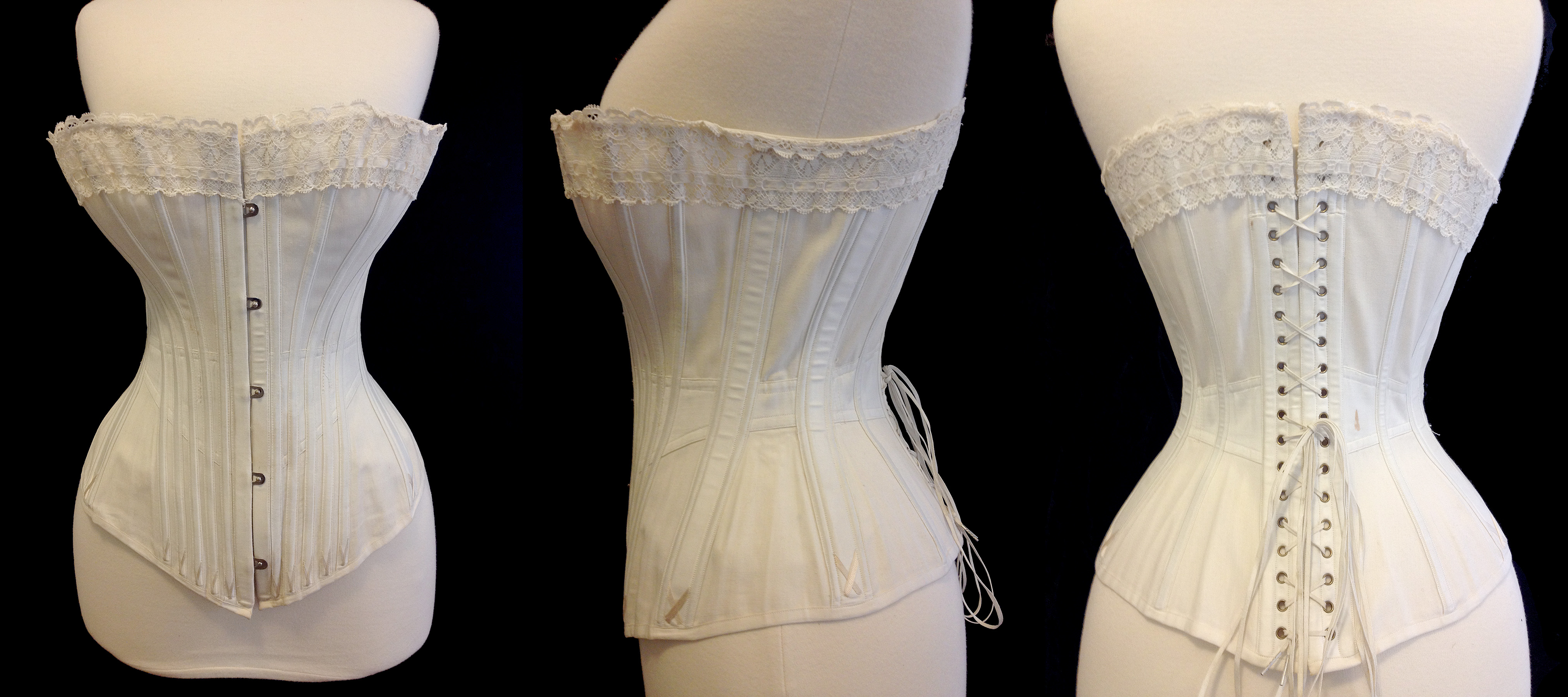
Lady Rose is on the precipice of a fashion revolution to reflect the growing support for women's rights in the western hemisphere.  Suffragettes demanding equality and the right to vote is synonymous with women ditching their corsets and other restrictive accessories.  (Thank God!  Can you imagine still wearing all of those buttons?  Distorting our spines and ribs?  Crushing our organs?)  Anyway, quick history lesson:  Do you know how corsets are made and how they work?  The short version is that rigid strips are placed vertically to help comprise the frame of a corset.  While types of corsets and materials used changed throughout history, these vertical strips are called boning.  This is likely due to the fact that, in early corsets, they used actual whalebone to create these devices.

Snobbery is set during the Edwardian Era, like this corset
(roughly 1901-1919)


Early 20th Century Style Corset

I may have ruined the punchline with all this lead up, BUT, it is important that understand boning to appreciate my favorite line from Snobbery with Violence.  Having a conversation with her mother about her wardrobe choices, Lady Rose attempts to explain why she has chosen to wear a blouse and skirt instead of a corset and gown/dress.  The response from the elder Lady-Earl Summers is without equal:

A lady must ohhhhhhhhlways* be prrrrrrrrroperly** boned***.


*British for "always"
**Really roll those RRRs for the most uppity effect
***Pronounced boooowwwwwned, in the most Jiminy Glick way possible


And with that, I take my leave.

March 26, 2024

Mata Hari's Last Dance, by Michelle Moran

"Mata Hari" is one of those notorious names that we all recognize from pop culture but, when questioned, few of us could explain this person's identity.  Truthfully, until the past six months or so, I'd had no idea who Mata Hari even was.

My favorite podcast on the planet is Myths and Legends.  I somehow stumbled upon it several years ago and love absolutely everything about it.  Jason Weiser -later joined by his wife Carissa- is a masterful storyteller of some of our planet's greatest hits.  So when I got completely caught up to real time on the current release schedule of new episodes, I turned to one of the Weisers' other podcasts: Scoundrel: History's Forgotten Villains.  It was here that I learned about Matthew Hopkins (Witchfinder General), Cattle Annie & Little Britches (Teen Girl Old West Outlaws), Sarah Wilson (Fake British Princess), Sidney Gottlieb (The Man Who Tried to Control Minds), Sister Virginia Maria (The Murderous Nun of Monza), and Hong Xiuquan (Demon-Slaying Rebel and Brother to Jesus Christ).  It's quite a cast of characters.

Among these interesting -and often deranged- individuals was a young, beautiful Dutch woman named Margaretha Geertruida (Zelle) MacLeod.  Young Margaretha was born in Leeuwarden, Netherlands in 1876 to Adam and Antje (van der Meulen) Zelle.  After falling into financial ruin, Adam abandoned his family and Margaretha's parents later divorced. Antje eventually died in 1891, leaving her four children to essentially fend for themselves or to rely on inconsistent support from relatives.  After a few years and a series of failed attempts at success, a now 18-year-old Margaretha answered an ad that had been posted in a Dutch newspaper: a Dutch colonial army captain 20 years her senior was looking for a wife.


Ahhh, the good ol' days.

Margaretha Zelle married Rudolf MacLeod and the two eventually moved to Java where their marriage continued to suck.  The couple had two children, he drank, was abusive, openly kept a concubine, and was overall just a terrible person.  In an effort to escape the horrors of her everyday life, Margaretha began to pour herself into learning all she could about the culture of Indonesia.  Tragedy struck when, under mysterious (and perhaps sinister) circumstances, both of Margaretha's children fell terribly ill.  Her daughter, Jeanne survived.  Her son, Norman-Jean, was not so lucky.

By this time, Margaretha had joined a local dance company and had continued to study all she could about Javanese/Indonesian culture.  She had even taken the artistic stage name Mata Hari, meaning "eye of the sun". Eventually moving to Paris, Margaretha cast off her old self, claiming to have always been Mata Hari: a princess from Java, born into the Hindu faith and practicing sacred Indian dances all her life.  Given her dark features and deeper complexion (as a European), her public more or less believed her.  Today, we call that cultural appropriation, and it isn't nice.  Our modern sensibilities see her exploitation of a culture for her own gain as an affront, and it is certainly that.  However, one might also consider it a means of survival under the circumstances, and grant a certain measure of forgiveness.  (Or not.  Just the facts.)

But these are not the events most commonly associated with Margaretha Zelle MacLeod.  Mata Hari is known as a seductress, exotic dancer, and femme fatale, perhaps inspiring later artists such as Josephine Baker.  Reading about her life as an exotic dancer and courtesan living in Paris during la Belle Epoque, one cannot help but think of the character of Satine from Moulin Rouge.  Yet even these are not her biggest claims to fame.

Mata Hari was controversial during her time at the beginning of the 20th century.  Her career reached its height when she was in her thirties, late in life for someone in her line of work.  As her performing star began to decline, she gained more work as a courtesan.  But Europe was on the brink of war, and Mata Hari had travelled all over Europe, finding lovers (and bankrollers) nearly everywhere she went: France, Spain...

...and Berlin.

World War I began but, because the Netherlands had remained neutral, Margaretha was able to cross borders with relative freedom as a Dutch citizen.  Still, her movements drew the attention of both sides: Mata Hari had been known to have slept with the enemy.  Was she a spy?  She was eventually arrested and brought before a French military court.  Whether she had been guilty or not, her trial was clearly biased.  There was never any hard evidence provided as to her alleged espionage (beyond her promiscuity and having accepted money from Germans of rank), but she stood accused of causing the deaths of thousands of Allied soldiers.  She vehemently denied all culpability until her dying day stating, "A courtesan, I admit it.  A spy, never!"  Nevertheless, the French military tribunal found her guilty and sentenced her to death within an hour.

From a History Channel article by Evan Andrews:

The question of Mata Hari’s guilt continues to fascinate historians to this day. The documents from her trial were sealed for several decades, but many of the researchers who’ve since studied them have concluded that the case against her was flimsy. Most of the prosecution’s evidence was circumstantial, and her defense attorney was prevented from introducing witnesses that might have backed up her claims. While many scholars remain convinced that Mata Hari was indeed a spy, others contend that she was scapegoated or even framed in order to raise French morale during one of the darkest periods of the war. Nevertheless, the true extent of her espionage may never be known for certain.

So what about the book, Mata Hari's Last Dance by Michelle Moran?


I would probably never have given this book a second look had it not been for the episode of Scoundrel that I listened to on Mata Hari (Exotic Dancer War Criminal).  I was so intrigued and saddened by her story that I was hungry to know more.  I found myself researching her and eventually landed on this novel.  No, it isn't all factual -it is a novel, after all- but it cast a new light based on the author's research on Margaretha Zelle.  Michelle Moran presents us with the story of Mata Hari on the eve of her success through her ultimate demise, using her relationship with Edouard Clunet, the man who would eventually act as her defense attorney, to propel the plot.  (I'm not sure how much of this relationship is fact or fiction, but Clunet was indeed a real person.)  Flashbacks to Margaretha's past fill in the blanks of her history without sacrificing continuity.  As a work of fiction, it's good.  Great?  Maybe not, but certainly intriguing. 

Personally, I'm inclined to believe she was neglected by her family after her father left and her mother died.  She struggled to find her way and, with no guidance or support (and perhaps attachment issues?), she made some bad decisions...like, really bad decisions.  Bereft after the death of her son and the loss of her daughter (that's a separate story), she made more bad decisions.  As a single, fatherless, divorcee in a time when women weren't even allowed to vote (in France), she adopted a lifestyle that afforded her both power and security.  Can you really fault her for that?  I think she was a fool who made foolish choices, but I struggle to see her as a spy.  If she was, she was the worst spy in human history.

Guilty or not, Margaretha Zelle MacLeod (aka Mata Hari) was executed by a firing squad of 12 French soldiers early in the morning of October 15, 1917.  A reporter who witnessed the execution stated that she blew a kiss to the firing squad before they took her life.

Maybe not a spy, but definitely a badass.