Showing posts with label Women. Show all posts

March 18, 2025

A Lack of Temperance, by Anna Loan-Wilsey

Once upon a time, I branched out by picking up a murder mystery novel by a different author.

I know.  It happened.

I am finishing up a series of "hot dog books" by a particular author (collective review forthcoming) but, while at the library, I came across a new series that takes place largely in the American Midwest.  As a Midwesterner, I recognize a lot of these places, and my own hometown is briefly referenced a couple of times in the novel.  (Fame, here we come!)


Author Anna Loan-Wilsey also writes under
the nom de plume Clara McKenna. 
This is the same person/novel.


Anyway, the first novel in the Hattie Davish Mystery Series takes place in turn-of-the-century Eureka Springs, Arkansas at the height of the Temperance Movement.  For those not familiar with this bit of history, the Temperance Movement was a predominantly woman-led ideology that villainized liquor of all kinds, citing its abuse as the cause for violence, sloth, domestic problems, and a laundry list of other sins.  While much of this was (is) indeed legitimate, the Women's Christian Temperance Union (WCTU) sought to legally outlaw liquor, shut down saloons and other alcohol-serving establishments, and prosecute anyone breaking the laws they wished to enact.  Sometimes, these ladies (and occasional gents) got rather zealous and even (quite ironically) violent.  The Temperance Movement certainly marked an interesting period of American history, although it must be said that the WCTU actually exists to this day.  

Funnily enough, I came across a great podcast episode about the WCTU after reading this book and realized that the murder victim of the novel (Mother Trevelyan - don't worry, this isn't a spoiler) is clearly based on a major player in the WCTU, right down to her hatchet wielding fervor.  Carry A. Nation -aka the "Hatchet Granny"- was a radical leader of the Temperance Movement, who relished destroying saloon property.  (If you choose to listen to this episode of An Old Timey Podcast, please suspend any sense of prudeness and just enjoy it.)  

A strikingly similar scene at the beginning of A Lack of Temperance serves as an introduction to the murder victim.  But Mother Trevelyan isn't the protagonist!  That would be (wait for it) Hattie Davish.  This is the first of the Hattie Davish Mystery Series after all.  Anyway, directly from the dust cover:


"On the eve of the heated presidential election of 1892, Miss Hattie Davish arrives in Eureka Springs, Arkansas, a scenic resort town where those without the scent of whiskey on their breath have the plight of temperance on their tongues. Summoned for her services as a private secretary, Hattie is looking forward to exploring the hills, indulging her penchant for botany—and getting to know the town’s handsome doctor. But it’s hard to get her job done with her employer nowhere to be found . . .


An army of unassuming women wielding hatchets have descended on the quiet Ozark village, destroying every saloon in their path—and leaving more than a few enemies in their wake. So when their beloved leader, Mother Trevelyan, is murdered, it’s easy to point fingers. Now that she’s working for a dead woman, Hattie turns to her trusty typewriter to get to the truth. And as she follows a trail of cryptic death threats, she’ll come face to face with a killer far more dangerous than the Demon Rum . . ."


Not highbrow, but still a lot of fun...if one goes in for that sort of thing.  I imagine I'll check out the second book in the series at some point, though it isn't a priority.  A perfect distraction from life and a diverting, easy read...especially when paired with a cocktail. ;)


Cheers!

October 28, 2024

Historical/Gothic Fiction with Hester Fox

 In previous posts, I have reviewed books by the contemporary author Hester Fox.  Fox tends to gravitate towards gothic fiction, often set in the 19th century.  For previous posts on her works, click the links below:

The Witch of Willow Hall (2018)

The Widow of Pale Harbor (2019)

A Lullaby for Witches (2022)

The Last Heir to Blackwood Library (2023)

Over the past month or so, I read the remaining two (current) publications by Hester Fox.  To be honest, I really didn't love either one.

The Orphan of Cemetery Hill (2020)


Y'all, this book was B-A-D.  The characters were dull, the plot was preposterous, and the denouement was non-existent.  The main character is a young woman by the name of Tabitha Cooke.  Tabitha can commune with the dead, but this fact must remain a secret so that people don't take advantage of her.  She is impoverished and an orphan, separated from her older sister -who can see the future- during her childhood.  When Tabitha's friend's fiancée is murdered, he is suspect #1.  Of course, he didn't kill his lovely bride-to-be and Tabitha knows this, since she talked to her ghost.

And it just goes downhill from here.  But I still read it.  Shame on me. 

The Book of Thorns (2024)


Hester Fox's most recent publication is tepid, at best.  Two sisters were separated so early in childhood that neither of them actually recalls having a sister.  However, a bond they share -a gift their mother also had- is their ability to commune through and with flowers.  During the Napoleonic wars, older sister Cornelia is working with the French army as a healer.  Younger sister Lijsbeth is mostly mute, and works as a housemaid for a wealthy family in Belgium.  On opposing sides of a war, the sisters reconnect with each other, learn about their past, and are able to piece together their futures.  In Hester Fox fashion, it is contrived and (mostly) predictable.  I also found it annoying how hard she clearly worked to get a f/f/m love triangle worked into the plot.  It felt forced and did not add one iota of excitement to the story.  While I won't say it was her worst book, I'd rate it slightly below average.

If you asked me today to rank these books, I would probably do so as follows:

  1. The Last Heir to Blackwood Library
  2. The Widow of Pale Harbor and/or The Witch of Willow Hall **
    **Caveat being the first scene of the book where a cat is hurt.  Hated that.
  3. A Lullaby for Witches and/or The Book of Thorns
  4. ----
  5. ----
  6. ----
  7. ----
  8. ----
  9. ----
  10. ----
  11. The Orphan of Cemetery Hill
Hester Fox will be releasing another book in 2025.  I'm eager to read it and rank it here for you!

October 1, 2024

Witches, Witches, Everywhere! (A NEW 4-in-1 post)

Four books.  I'm writing about four books.  This is a new multiple book post record!  But I felt that these books were appropriate to put together as they all revolve around a similar theme.  Since we are approaching Halloween, what better time to talk about...


...witches!!!

Three of these four books are by the author Hester Fox, whom I mentioned in a previous post that included her 2023 novel The Last Heir to Blackwood LibraryAfter reading several more of her works, I can see that Ms. Fox most definitely follows a formula and, so far, always in the genre of gothic historical fiction.  While her stories are not what I would consider particularly highbrow, nor do they stick with you after the final page, they are certainly entertaining.  And sometimes, that's just what you need.  (Hot dog books, am I right?) If you go into one of her novels with this mindset, you might find yourself swept up in a dark, broody past, typically set in mid-19th century New England (Blackwood Library being the one exception among those that I've read thus far).

Anyway, the first of these witchy novels that I'd like to talk about today is Hester Fox's debut book:

The Witch of Willow Hall

After a series of damning rumors destroy the reputation of the Montrose family, sisters Catherine, Lydia, and Emeline -along with their parents- find themselves moving from Boston to the small town of New Oldbury, Massachussetts.  Set in the early 1820s, the Salem witch trials are a thing of the past...but not forgotten.  As Lydia (our main protagonist and first person narrator) begins to notice strange things around the country estate, things take a supernatural turn.  Lydia eventually discovers her family's dark secrets and scandals but, most of all, she learns that certain traits -and abilities- run in the family.


I hated how this book opened.  Like, HATED IT and almost refused to read it any further than the first few pages.  People who know me understand one thing very well:  I do not abide animal cruelty.  In any form.  I don't tolerate it in books, TV, movies, anything.  The animal can end up fine but, if you're a storyteller and you put an animal in distress, then I'm simply no longer interested in anything you have to say as a writer or as a human being.  As such, you can imagine my disappointment when the story opened by describing -in moderate detail- an event taking place where my favorite animal was killed.  While I understand Hester Fox's use of this event to illustrate the goodness in the main character (who absolutely loses her shit at this loss of a beloved pet), I do not appreciate it.  ONE HUNDRED THUMBS DOWN FOR THIS, MS. FOX!

In a very uncharacteristic act, I continued reading.  I don't know why I did, but I did so with caution.  I knew that if one more animal got hurt, I'd be done.  (That was it, by the way.)  However, the book was filled with a number of other triggers that, for people like me, can be quite problematic.  [At the risk of spoilers, readers beware:  A baby dies (possible miscarriage).  A child dies (actually, two kids die).  There are some mildly graphic mentions of hangings and house fires.  There is consensual incest.]

Ew.  Come to think of it, why did I like this book?

OK, so some weird and gross shit happens.  It was the 1800s, man!  People were weird AF!  But there was a lot of action in the book that did not fall under any of these categories and was not gross.  I just felt compelled to share some common triggers with y'all.

"It was the 80s, man!  I told you, the 80s was a wild place."

Personally, I love the theme of witchcraft.  When I say witchcraft, I'm not referring to the dark arts or sinister practices, rather to the idea of women asserting power when and where they can.  Imagine growing up in a world where you had no voice, your only purpose was to make a good match (hoping he wasn't an asshole), serve your husband, procreate, and keep it tight.  Your entire existence was subservient, reading novels was frowned upon and led to mental distraction, your appearance indicated your level of sanity (looking disheveled being the equivalent of insanity), and you were so tightly buttoned up -both literally and figuratively- that any misspoken word could destroy your reputation.  All this while your bones are being contorted in tiny, pointed shoes and your lung capacity diminished in disfiguring corsets.  It's no wonder we all got the vapors!

But there is something about witchcraft that reasserts a level of power.  Think about the symbols of witchcraft:  an understanding of nature and herbs (in a cauldron?) to heal and soothe, a broom to maintain cleanliness of a space, a cat to chase the mice away (still thinking hygiene, not to mention companionship), a connection to other women and their shared wisdom.  That's witchcraft.

Ultimately, it is this sort of witchcraft that is wielded in this book.  Generations of women, passing down their compassion, wisdom, and understanding to their daughters, granddaughters, and beyond.  Isn't that a lovely thought?

But yeah.  Some spooky and gross shit happens too.

A Lullaby for Witches

I'm just going to include the description for this book from it's Amazon page because I could do no better:

"Two women. A history of witchcraft. And a deep-rooted female power that sings across the centuries.

Once there was a young woman from a well-to-do New England family who never quite fit with the drawing rooms and parlors of her kin.  Called instead to the tangled woods and wild cliffs surrounding her family’s estate, Margaret Harlowe grew both stranger and more beautiful as she cultivated her uncanny power. Soon, whispers of “witch” dogged her footsteps, and Margaret’s power began to wind itself with the tendrils of something darker.

One hundred and fifty years later, Augusta Podos takes a dream job at Harlowe House, the historic home of a wealthy New England family that has been turned into a small museum in Tynemouth, Massachusetts. When Augusta stumbles across an oblique reference to a daughter of the Harlowes who has nearly been expunged from the historical record, the mystery is too intriguing to ignore.

But as she digs deeper, something sinister unfurls from its sleep, a dark power that binds one woman to the other across lines of blood and time. If Augusta can’t resist its allure, everything she knows and loves—including her very life—could be lost forever."


Unlike the witches in The Witch of Willow Hall, we encounter a darker force in the sequel-ish novel A Lullaby for Witches (also by Hester Fox).  Of the books I've read by this author (to date), this one is my least favorite.  The concept was intriguing, but the characters were bleh.  Ultimately, the plot felt contrived and the conclusion was forced.  I did like the main characters' connections to the Montrose family from The Witch of Willow Hall, but it fell short in most every other way.  In fact, it was so unmemorable that I'm done talking about it.

The Widow of Pale Harbor

In yet another novel by Hester Fox, we encounter the idea of witchcraft, but in a non-magic sort of way.  None of the characters in this book possess any actual powers, although rumors swirl in accusation of such wickedness.  

Set in the sleepy, idyllic town of Pale Harbor, Maine, we meet the newly bereaved Gabriel Stone, a widower intent on honoring his late wife's wishes of spreading the transcendentalist movement.  While Gabriel doesn't particularly believe in transcendentalism himself, his wife was passionate about it and, feeling a sense of guilt at her death (childbirth), he feels compelled to do something for her.  It's weird and far-reaching, but people do weird things for grief, I guess.

Meanwhile, the spooky, witchy widow Sophronia Carver ("She has a tail!") is living alone up at Castle Carver (not a castle, just a bigass house) with only three discreet servants to help her.  The entire town suspects Sophronia of having killed her late husband, a well-respected businessman and magazine editor, whose cosmopolitan appeal charmed the residents of the small town.


Remember how I said Hester Fox had a formula?  It applies here, too.  But please also remember what I said about that:  "While her stories are not what I would consider particularly highbrow, nor do they stick with you after the final page, they are certainly entertaining. [...]  If you go into one of her novels with this mindset, you might find yourself swept up in a dark, broody past, typically set in mid-19th century New England" (source: me).

Just like the premise for the character of Gabriel Stone, the entirety of this book is far-reaching from a critical standpoint.  But, these unbelievable prompts are what propel the plot (alliteration!) and allow for readers to be entertained.

Finally, in a deviation from Hester Fox, I have one more book about witches.

The Girl and the Witch's Garden

This final book centering on witches is nothing like the previous three.  In fact, this is a children's novel by author Erin Bowman.


When young Piper Peavey's father is diagnosed with cancer, she is sent to live with her estranged  mother and distant grandmother at the mysterious Mallory Estate.  Upon arriving, Piper learns that her mother has taken in a number of other children -all with magical abilities- while neglecting her own daughter.  Frustrated at her mother's apparent enthusiasm for her foster kids, Piper becomes hurt, jealous, and determined to figure out what is behind the strange happenings at Mallory Estate.

I was honestly drawn to this book by the cover art.  Isn't it charming?!?!?!?!  I love the illustration (especially the cat) and thought that my own daughter might enjoy the book, so I checked it out from our local library.  At the end of the story, she and I agreed: although it wasn't a particularly memorable read, it was (like those of Hester Fox) entertaining for the duration.  It's about the ride, right?

Clearly drawing from more classic children's literature (think: Harry Potter, The Secret Garden, etc.), The Girl and the Witch's Garden is a charming read, even for adults.  Themes of loss, grief, friendship, belonging, and family are all included in this story of the main character and her discoveries.  (Of note:  There are some potential triggers in this book as well including, but not limited to abuse, neglect, loss of a parent.)


Four different books, mostly enjoyable, all featuring something pertaining to witches.  Happy reading and HAPPY HALLOWEEN!


September 16, 2024

Persepolis and Persepolis 2, by Marjane Satrapi

For better or worse, we all remember our childhoods.  The ups, the downs, the highlights and major moments -- it's all there.

Iranian graphic novelist, Marjane Satrapi, recounts her childhood (roughly ages 6-14) growing up in Tehran in Persepolis: The Story of a Childhood.  As a child, Satrapi witnessed the overthrow of the Shah of Iran, the subsequent Islamic Revolution, and the crippling war with Iraq.  Raised by passionate Marxists in a precarious time, Satrapi's unique views of the world were shaped by her family and her environment.  Nevertheless, she was a child and an adolescent girl who experienced all the things that girls do: friendships, nail polish, boyfriends, school, and -sometimes- being too mouthy for her own good.


In the follow-up, Persepolis 2: The Story of a Return, Satrapi recounts her life as a teenage student -alone and abroad- in Europe.  While she was sent to Austria to escape the dangers of war-torn Iran under an intense and extreme regime, her world remained precarious.  She navigated adolescence without the loving guidance of her parents, who had to stay in Iran, and trouble often ensued.  Persepolis 2 brings Satrapi into adulthood, returning to Iran, then traveling abroad once again (this time to France).


It is hard to imagine a coming of age like the unique one experienced by Marjane Satrapi.  Most of us have our own stories, but few of them involve the horrors she witnessed.  Nevertheless, Satrapi tells her story with wit, the dark humor required to survive such trauma, and an amazing cohesion that ties all these seemingly unrelated life events into a continuous story.  

As graphic novels, Persepolis and Persepolis 2 are rather "quick and easy reads", despite the weight of their contents.  While my library categorizes them as Young Adult graphic novels, I would recommend they be reserved for more mature YA readers.  Yes, a teenager could handle it, but they are heavy and, sometimes, quite graphic and/or violent.

Ultimately, these are intriguing reads by a very talented graphic novelist.  Fascinating and informative, hilarious and heartbreaking, I would recommend them to anyone looking for a new perspective or world experience.

August 13, 2024

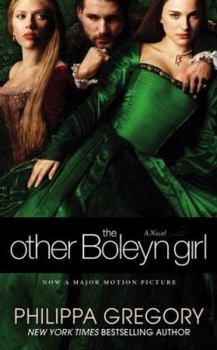
The Other Boleyn Girl, by Philippa Gregory

When I was finishing college, a movie based on a book came out starring The Hulk, Thor's girlfriend, and Black Widow in Tudor England.  I ask you, what about that statement is not extraordinary?


It's true, of these three Marvel wonders, only Hulk (2003) had actually come out by the time this film adaptation of The Other Boleyn Girl (2008) was released.  But the book, which is what we're here to discuss today, was published in 2001, prior to any of these box office releases.

European history has always held a sort of fascination for me.  I remember learning of Henry VIII and the rhyme involving his six wives when I was in 7th grade social studies class: "divorced, beheaded, died, divorced, beheaded, survived".  Any asshole who straight up murders his family and changes a nation's history, religion, and politics to better suit his sex life is a narcissist who leaves a mark on your brain.  Anyway, I started this whole pointless anecdote with my being in college...I saw a friend of mine on campus one day reading this book, and I found that I was jealous.  With my areas of study (French, English, Art History), my reading time was swallowed up by required texts for an array of classes.  (Side note:  the French lit that was mandated was ALWAYS BORING AND WEIRD AF.)  By the time I'd finish one book and write a subsequent paper on it, it was time for another.  Reading for pleasure was a rare treat until a semester ended.

Fast forward about 16 years and here I am!  I finally read this book and, may I say, it would have been better if the Hulk had actually been in it.

Even this Hulk...


To be truthful, the book wasn't bad.  It sparked my curiosity about a number of things, so I found myself doing quite a bit of fact checking.  Of course, it is a work of fiction and claims to be nothing else, but it does leave me frustrated when historical fiction authors deviate a great deal from accepted truth about a time, place, or person.  (Example:  Mary Boleyn being banished from court for a clandestine marriage was true.  Contrary to the book, however, I believe she was disowned by her family and never allowed to return to court.  Also never mentioned in the novel:  Anne did eventually try to make some financial provisions for her sister.)  Although it was an engrossing diversion, it did make me feel sad and disgusted by the time, place, and just about every person.  

For instance...

Henry VIII - I don't feel like I need to say much about why this guy was awful.  Narcissistic, self-involved, and just straight up gross.  He thought he was sly in the way that children think that if they cover their eyes, they become invisible.  He couldn't keep his pants on and murdered people who didn't suit his baser desires.  Plus he liked hunting and bear-baiting, so clearly a sociopath.

Boleyn and Howard families - There is nothing wrong with being ambitious, so long as one's ambitions are in check with reality.  The Boleyn and Howard families (Howard being Mary and Anne's maternal family surname) thought nothing of sacrificing their daughters' well-being -and LIVES- for their own monetary and social gain.  You'd think they would have learned from the executions of Anne and George (two out of three of their CHILDREN!!!) that ambition in the Tudor court is a dangerous game, but they did not.  In fact, it was Catherine Howard (a relative of Anne's) who was the other "beheaded" of Henry's gruesome lineup of wives.  Seems that the Boleyns and Howards have a theme.  Were they apologetic?  It wouldn't appear so...

Mary Boleyn - It's easy to judge through a modern lens, but she just seems whiny and pathetic - at least in the book.  Still, if the novel is based on any measure of fact, her abuse and/or neglect began at a young age, and people do weird things when subjected to cruelty and childhood marriage.  The ultimate reality of Mary Boleyn's life is just that it was sad.

Anne Boleyn - According to the novel, she was a total bitch.  I wonder if any of this portrayal is accurate.  Maybe so.  History certainly considers her cunning and willing to angle, but I'm curious to what extent she abused her relationship with Mary in real life.  For example, quick research will reveal that Anne did not steal-adopt Mary's son from her (naughty), rather provided for his education as her ward (nice).  There's a difference.  I'm unable to tell if Anne ever used Mary's children as pawns in her schemes, but there doesn't seem to be any real evidence of that happening.

Catherine of Aragon - Good lord, what a sad situation.  Catherine of Aragon -Henry's first wife- appears to have done nothing to merit her treatment and ousting...beyond getting older, of course.  (For shame!!!)  The number of children she lost to miscarriage or stillbirth is heartbreaking, and certainly not her fault, but she appears to have borne the blame.  God knows what actually went on inside her head but, a devoutly religious person, to have been forced into a divorce would have upset her fervent Catholic beliefs.  Furthermore, to be denied access to her one living child (Princess Mary) is nothing short of cruel.  On top of that, Catherine was a lifelong royal.  Before becoming Queen of England, she was Princess of Spain (her parents being the Ferdinand and Isabella who funded Christopher Columbus's 1492 voyage).  For her to be ousted was, more or less, a double blow.

Princess Mary - Oh, Bloody Mary.  Honestly, her fall from favor makes her later "bloodiness" almost understandable.  As Henry's first legitimate child, she was raised as a princess.  Although her parents were mostly absent from her upbringing (typical of the time), she would likely have enjoyed their affections from afar.  Well educated, provided for, and visited from time to time, she was a standard English princess.  Of course, once Anne Boleyn entered the picture, everything changed.  She was cast off, forced to wait on her -arguably illegitimate- stepmother (Anne) and half-sister (Elizabeth).  Not only would this blow to her pride and position have humiliated her, she was then denied visitation to her one remaining ally: her own mother.  Poor Mary was even forbidden to attend her mother's funeral.  So yeah, she went a little scorched earth during her own reign as Queen of England.  Should she have been so cruel to English non-Catholics?  Certainly not.  But perhaps it was one way she felt she could exert control, and a return to her mother's staunch morals and memory.

While the novel The Other Boleyn Girl certainly does highlight each of these characters and their individual stories, it does deviate somewhat from the truth.  Of course, as historical fiction, this is to be somewhat expected.  I do feel that it does well to embody the spirit of the time and characters mentioned, if not in a wholly accurate portrayal.  We can only speculate as to who these people were beneath the bravado, but the fall from grace experienced by each one is nothing less than tragic and unnecessary.

A final note:  It is so easy to miss the human nature of historical figures.  After all, they are typically reduced to dates, facts, and a few accomplishments or failures.  Even their portraits -that really don't resemble us today- appear cold, distant, and unrelatable.  Catherine of Aragon and Anne of Boleyn were both considered beauties in their time, but paintings of them leave us (me) questioning the beauty standards of the day.  Until I came upon this...

A present-day artist took the portraits of each of Henry VIII's wives and made modern re-creations of them using AI.  The results are stunning and, to me, made me reconsider not only the beauty of these six women, but their humanity.  Somehow, seeing Anne of Cleves with a full smile or Catherine of Aragon in a Nike sports bra makes them seem like people I might know.

Six Wives of Henry VIII: Modern Recreation

March 26, 2024

Mata Hari's Last Dance, by Michelle Moran

"Mata Hari" is one of those notorious names that we all recognize from pop culture but, when questioned, few of us could explain this person's identity.  Truthfully, until the past six months or so, I'd had no idea who Mata Hari even was.

My favorite podcast on the planet is Myths and Legends.  I somehow stumbled upon it several years ago and love absolutely everything about it.  Jason Weiser -later joined by his wife Carissa- is a masterful storyteller of some of our planet's greatest hits.  So when I got completely caught up to real time on the current release schedule of new episodes, I turned to one of the Weisers' other podcasts: Scoundrel: History's Forgotten Villains.  It was here that I learned about Matthew Hopkins (Witchfinder General), Cattle Annie & Little Britches (Teen Girl Old West Outlaws), Sarah Wilson (Fake British Princess), Sidney Gottlieb (The Man Who Tried to Control Minds), Sister Virginia Maria (The Murderous Nun of Monza), and Hong Xiuquan (Demon-Slaying Rebel and Brother to Jesus Christ).  It's quite a cast of characters.

Among these interesting -and often deranged- individuals was a young, beautiful Dutch woman named Margaretha Geertruida (Zelle) MacLeod.  Young Margaretha was born in Leeuwarden, Netherlands in 1876 to Adam and Antje (van der Meulen) Zelle.  After falling into financial ruin, Adam abandoned his family and Margaretha's parents later divorced. Antje eventually died in 1891, leaving her four children to essentially fend for themselves or to rely on inconsistent support from relatives.  After a few years and a series of failed attempts at success, a now 18-year-old Margaretha answered an ad that had been posted in a Dutch newspaper: a Dutch colonial army captain 20 years her senior was looking for a wife.


Ahhh, the good ol' days.

Margaretha Zelle married Rudolf MacLeod and the two eventually moved to Java where their marriage continued to suck.  The couple had two children, he drank, was abusive, openly kept a concubine, and was overall just a terrible person.  In an effort to escape the horrors of her everyday life, Margaretha began to pour herself into learning all she could about the culture of Indonesia.  Tragedy struck when, under mysterious (and perhaps sinister) circumstances, both of Margaretha's children fell terribly ill.  Her daughter, Jeanne survived.  Her son, Norman-Jean, was not so lucky.

By this time, Margaretha had joined a local dance company and had continued to study all she could about Javanese/Indonesian culture.  She had even taken the artistic stage name Mata Hari, meaning "eye of the sun". Eventually moving to Paris, Margaretha cast off her old self, claiming to have always been Mata Hari: a princess from Java, born into the Hindu faith and practicing sacred Indian dances all her life.  Given her dark features and deeper complexion (as a European), her public more or less believed her.  Today, we call that cultural appropriation, and it isn't nice.  Our modern sensibilities see her exploitation of a culture for her own gain as an affront, and it is certainly that.  However, one might also consider it a means of survival under the circumstances, and grant a certain measure of forgiveness.  (Or not.  Just the facts.)

But these are not the events most commonly associated with Margaretha Zelle MacLeod.  Mata Hari is known as a seductress, exotic dancer, and femme fatale, perhaps inspiring later artists such as Josephine Baker.  Reading about her life as an exotic dancer and courtesan living in Paris during la Belle Epoque, one cannot help but think of the character of Satine from Moulin Rouge.  Yet even these are not her biggest claims to fame.

Mata Hari was controversial during her time at the beginning of the 20th century.  Her career reached its height when she was in her thirties, late in life for someone in her line of work.  As her performing star began to decline, she gained more work as a courtesan.  But Europe was on the brink of war, and Mata Hari had travelled all over Europe, finding lovers (and bankrollers) nearly everywhere she went: France, Spain...

...and Berlin.

World War I began but, because the Netherlands had remained neutral, Margaretha was able to cross borders with relative freedom as a Dutch citizen.  Still, her movements drew the attention of both sides: Mata Hari had been known to have slept with the enemy.  Was she a spy?  She was eventually arrested and brought before a French military court.  Whether she had been guilty or not, her trial was clearly biased.  There was never any hard evidence provided as to her alleged espionage (beyond her promiscuity and having accepted money from Germans of rank), but she stood accused of causing the deaths of thousands of Allied soldiers.  She vehemently denied all culpability until her dying day stating, "A courtesan, I admit it.  A spy, never!"  Nevertheless, the French military tribunal found her guilty and sentenced her to death within an hour.

From a History Channel article by Evan Andrews:

The question of Mata Hari’s guilt continues to fascinate historians to this day. The documents from her trial were sealed for several decades, but many of the researchers who’ve since studied them have concluded that the case against her was flimsy. Most of the prosecution’s evidence was circumstantial, and her defense attorney was prevented from introducing witnesses that might have backed up her claims. While many scholars remain convinced that Mata Hari was indeed a spy, others contend that she was scapegoated or even framed in order to raise French morale during one of the darkest periods of the war. Nevertheless, the true extent of her espionage may never be known for certain.

So what about the book, Mata Hari's Last Dance by Michelle Moran?


I would probably never have given this book a second look had it not been for the episode of Scoundrel that I listened to on Mata Hari (Exotic Dancer War Criminal).  I was so intrigued and saddened by her story that I was hungry to know more.  I found myself researching her and eventually landed on this novel.  No, it isn't all factual -it is a novel, after all- but it cast a new light based on the author's research on Margaretha Zelle.  Michelle Moran presents us with the story of Mata Hari on the eve of her success through her ultimate demise, using her relationship with Edouard Clunet, the man who would eventually act as her defense attorney, to propel the plot.  (I'm not sure how much of this relationship is fact or fiction, but Clunet was indeed a real person.)  Flashbacks to Margaretha's past fill in the blanks of her history without sacrificing continuity.  As a work of fiction, it's good.  Great?  Maybe not, but certainly intriguing. 

Personally, I'm inclined to believe she was neglected by her family after her father left and her mother died.  She struggled to find her way and, with no guidance or support (and perhaps attachment issues?), she made some bad decisions...like, really bad decisions.  Bereft after the death of her son and the loss of her daughter (that's a separate story), she made more bad decisions.  As a single, fatherless, divorcee in a time when women weren't even allowed to vote (in France), she adopted a lifestyle that afforded her both power and security.  Can you really fault her for that?  I think she was a fool who made foolish choices, but I struggle to see her as a spy.  If she was, she was the worst spy in human history.

Guilty or not, Margaretha Zelle MacLeod (aka Mata Hari) was executed by a firing squad of 12 French soldiers early in the morning of October 15, 1917.  A reporter who witnessed the execution stated that she blew a kiss to the firing squad before they took her life.

Maybe not a spy, but definitely a badass.

March 19, 2024

Hester, by Laurie Lico Albanese

Since I started listening to a lot more books in audio format, I've been able to actually start chipping away at my long list of books to read.  One book that happened upon my list (I forget where I heard of it) was Hester, by Laurie Lico Albanese. 


After reading my previous book, I wanted something lighter.  I did not find it.  

OK, I take that back.  Hester is lighter in the sense that it is a novel that will sweep you into another world, but it isn't lighter in terms of subject matter...something I ought to have known based on the premise!

The story is a complete fictionalization of the woman who would come to influence Hester Prynne of Nathaniel Hawthorne's The Scarlet Letter.  In her novel, author Laurie Lico Albanese imagines Isobel Gamble, a young newlywed Scottish immigrant who crosses the Atlantic with her husband, Edward, to begin a new life in Salem, Massachusetts.  Edward leaves her almost immediately to go back to sea as the ship's doctor/apothecary.  As Isobel remains alone in Salem, she meets a young Nathaniel Hawthorne, becoming his muse.

As she comes to learn, Nathaniel's history is one of guilt and shame that did indeed burden the writer in reality.  [Fact: The staunchly Puritan Hathorne family was instrumental in the convictions at the Salem witch trials of the 1600s.  Nathaniel Hawthorne was so ashamed of this history within his own family, that he even added the "w" to his name in an effort to distance himself from that dark aspect of his past.]  Yet Isobel has family secrets of her own.  Centuries past, her own "ancestress" was an accused and convicted witch who, with the help of friends (and perhaps the fairies of the Scottish highlands), was able to escape her own execution.

The premise of the book is certainly intriguing, particularly for those who have read The Scarlet Letter and will recognize the parallels.  While addressing the topics of witches, insanity, and moral ethics, the story also features a great deal of synesthesia and its role in individuals who did not understand it as a pathology/condition/gift (however you wish to define it).  I was surprised at the liberties taken by the author when it came to the character of Hawthorne, and wonder how he might take her rendition of him.  It's probably a good thing he's dead and not around to read it.


Once I realized the direction that the book was going with Hawthorne's character, the story became somewhat contrived and predictable.  While he was certainly no angel in real life, I felt it a somewhat unfair portrayal of him...unless she knows something I don't, perhaps?

Regardless, Hester is not a particularly cerebral book.  It has equal measures of intrigue, mystery, history, and romance, and makes for a good escape from the mundane.  Enjoyable, though perhaps not for everyone.

March 11, 2024

The Woman They Could Not Silence, by Kate Moore

It has been a minute!  I started this space about a year ago by playing catch-up on the books that I had already read in 2023, and I'm beginning 2024 in the same way.  Illness, injury, a dozen or so holidays, and a move to a new home have all catapulted to the center of my family priorities, and I'm just now beginning to exhale for the first time since mid-October.

As a result of all of the tumult, I have resorted to listening to a lot more books in audio format.  Sit-down reading time has been quite limited with all of the activity and appointments pertaining to the above excuses and, to be honest, my current hard copy selection is a slow moving one.  In spite of its haunting and intriguing plotline, The Marble Faun is tough to get into.  I believe I began it last fall, and am not quite halfway through it.  (I'll get there...)

But audiobooks!  While I'm certainly not new to this format (I've been listening to books since they were available on cassette), I haven't listened to a recorded reading of a book in perhaps a decade or more.  I know I'm behind the times, but a couple of friends recently introduced me to the Libby app, and now I'm hooked.  Months and months ago, one of these friends recommended that I read (listen to) a historical book about an individual whose name was entirely unfamiliar to me. Having never even heard the name Elizabeth Packard, I was not entirely certain what to expect...that is, until I read the book's description:

"...another dark and dramatic but ultimately uplifting tale of a forgotten woman whose inspirational journey sparked lasting change for women's rights and exposed injustices that still resonate today.

1860:  As the clash between the states rolls slowly to a boil, Elizabeth Packard, housewife and mother of six, is facing her own battle.  The enemy sits across the table and sleeps in the next room.  Her husband of twenty-one years is plotting against her because he feels increasingly threatened -- by Elizabeth's intellect, independence, and unwillingness to stifle her own thoughts.  So Theophilus makes a plan to put his wife back in her place.  One summer morning, he has her committed to an insane asylum.

The horrific conditions inside the Illinois State Hospital in Jacksonville, Illinois are overseen by Dr. Andrew McFarland, a man who will prove to be even more dangerous to Elizabeth than her traitorous husband.  But most disturbing is that Elizabeth is not the only sane woman confined to the institution.  There are many rational women on her ward who tell the same story:  they've been committed not because they need medical treatment, but to keep them in line -- conveniently labeled 'crazy' so their voices are ignored.

No one is willing to fight for their freedom and, disenfranchised both by gender and the stigma of their supposed madness, they cannot possibly fight for themselves.  But Elizabeth is about to discover that the merit of losing everything is that you then have nothing to lose..."


What more could I add to that description?  But what baffles me most is how have we never heard this story before?  

If you read the book, you will clearly see that "Dr." Andrew McFarland is a monstrous asshole yet, from 1968 to 2023, he had a mental health center named after him in Illinois.  (Spoiler alert:  They justly renamed the hospital the Elizabeth Parsons Ware Packard Mental Health Center in August 2023.)  How?  How is it possible for a man who openly accepted -sometimes encouraged- the physical and mental abuse of patients (I'll save the sordid details for the book) to be so renowned that it took us nearly two centuries to recognize that he should not have a mental hospital named after him?  A man who once said that patients were never to be trusted, and who openly stole their mail?  A man who willingly admitted people (women) to the institution who were not insane and attempted to hold them incarcerated indefinitely? 

I'll tell you how.  Andrew McFarland was powerful and celebrated.  He was a doctor who answered to no one.  He operated with impunity.  He was white in mid-nineteenth century America.  He was a man.

Whether you consider yourself a bra burner, a Mennonite, a raging lesbian who loves hiking a little too much, or a devout Muslim, one thing is true for us all.  Women have been denied our own history.  In the past couple of years, I have been poring over books and publications that tell the stories of women who, until that moment, were completely foreign to me.  Sure, we've all heard of Susan B. Anthony and Nellie Bly, but how much do we really know about these women?  A paragraph in a history book is hardly enough to explain.  These are the names we glossed over in school for their contributions to society during their respective times, but do any of us know exactly how they changed their worlds -and subsequently ours- for the better?  What did they change?  How did they do it?  What was the cost?  

Perhaps another way of considering the question of how well we know our own history is to consider all of the names we can list of famous men of the past.  Go ahead.  Write them down.  Now list the famous historical women.  There's no comparison when it comes to sheer volume of one over the other.  But let's take it a step further.  How many of those people -men or women- were ostracized?  How many of them were considered heroes?  How do we view them today?  Are they represented as bold world changers or as villains?

Elizabeth Packard had her flaws.  In my opinion, the most glaring fault she had was to be too forgiving of those who had destroyed her life and viciously ripped her children from her.  She was well liked by her community, an excellent homemaker, a doting mother, a devoted wife, and a cook of high praise - even Theophilus (her prick of a husband) said she had no equal.  But perhaps all these learned men were right.  She was, after all, a slightly different shade of Christian than Theophilus (he was Presbyterian, she attended the Methodist church), so she probably was insane and deserved to be locked up for life.

Crazy.  Insane.  Hysterical.  Witch.  All words that are almost exclusively applied to women throughout history, and even today.

I found myself able to identify with Elizabeth in so many ways.  From the first pages of the book, I knew we had a lot in common: moms who fiercely love our kids and genuinely enjoy teaching them and watching them grow; a love of reading, writing, and intellectual discourse; mouthy and outspoken; compelled to defend the underdog; creatures of habit and routine, even in the face of darkness.  We're both stubborn and stalwart Midwestern bitches who enjoy a good flex (readers will note her unwillingness to walk to her demise whilst still maintaining her dignity and propriety as defined by the time period).  At the time of her incarceration, she was close to my current age.  Even her diminutive stature, dark hair, and long features remind me of my own.  I feel like we could have been friends were it not for the 170 years separating our births.

And yet, unlike me, Elizabeth lived in a time where women, minorities, and the mentally ill genuinely did not have a voice.  Sure, it's an ongoing struggle that we all face today, but it pales in comparison to the norms of Civil War America.  Once she finally got out of the asylum, she could not afford to go scorched earth.  In order to enact the changes that she desired (amounting to dozens of legislative bills and laws at the federal level, as well as in numerous states across the country), she had to do so operating under the same set of rules and principles that existed prior to her imprisonment.  The reality was bleak: one wrong word, one wrong look and she could be sent back to the asylum to wither and die, forgotten by family, friends, and history.

So why is it that I had never heard of her?  I'm not a historian, but should that be a prerequisite for knowing about major players in history?  Elizabeth Packard's track record certainly qualifies her as a major player.  I had a public school education and attended a state university, but should I have to take a women's history course in order to learn about some of these people?  Why?  Aren't they important enough for regular history?  Or is "regular" history reserved only for the history of presidents and generals and the occasional token woman?  If that's the case, then maybe we ought to call them men's history classes.  (Now now, don't be absurd.)

The Woman They Could Not Silence was nothing short of inspirational.  Author Kate Moore masterfully crafts the book to read more like a novel than a biography, never suffering the reader (listener) to lose interest.  The adversities Elizabeth Packard faced were noteworthy by any metric, and this "little woman" conquered every single one.  I'm sure she struggled within herself and among trusted loved ones.  I know she dealt with depression brought on by the realities of her existence.  And yet she persevered eloquently and righteously, making real changes all over the country for the forgotten people who suffered in silence behind the iron doors of the asylums.

And Andrew McFarland?  Well, that bastard continued successfully for a time before choosing that "same-day shipping to the Lord" (my friend's words, not mine).  He hanged himself at the asylum where he worked.  But he was the one with the mental health center named for him.

Until now.

October 27, 2023

More Than A Body, by Lindsay Kite and Lexie Kite - PART TWO

I have opted to split this particular book into two separate reviews.  More Than A Body is a dense publication addressing the issues of body image, the objectification of the feminine body, and how these important topics influence our collective and individual psyches today.  PART ONE will outline the book's Introduction and first three chapters.  PART TWO will cover the final three chapters, as well as an overall reflection.  In between each post, you will find yet another -separate- review for an unrelated novel...because I wanted to do it that way.


Note that all quotes (both direct and paraphrased) come from this publication unless otherwise noted.  I have spent a great deal of time summarizing and recapping the points that I personally wanted to highlight and, although I'm sure that I have not followed standard citation protocol to the letter, I want to give credit where it is due.  


PART TWO:  CHAPTERS 4-6, REFLECTION


Chapter 4:  From Divided to United as Women

The fourth chapter of More Than A Body is dedicated to how women are often programmed to see each other as competitors instead of allies.  The result of our cultural upbringing can cause us to "feel defined by how we appear, and so we define everyone else, friend or foe, by how they appear, positively or negatively. [...]  The insidious objectification of girls and women by other girls and women often looks like self-comparison and competition, questioning and commenting, policing and patrolling".

Perhaps the most awakening piece of this chapter is how well-meaning body compliments often do more harm than good.  Yes, you read that right.  Positive comments on someone's appearance, while seemingly benign or uplifting, are still objectifying.  "They perpetuate the idea that we are most valued for our looks and always being evaluated accordingly [...] most of us are complicit without even knowing it. [...]  If you give looks-based comments the power to build people up, you reinforce their power to tear people down."  

Consider this:  All my life, people have commented on how small and "tiny" I am.  Over the years, I've even garnered (loving) nicknames reflecting this.  Year after year, friends and family would fawn over how cute and petite I was, how jealous they were of my skinny little body, and so on.  It was all meant to be kind and I took it that way.  (I still do.)  It gave me a sense of validation.  I felt valued.  It felt good.  Being cute and tiny became a major part of my identity.

But then I got pregnant.

Throughout my pregnancy, I vigilantly monitored my weight gain.  Nurses at my regular check-ups would comment on how jealous they were of me for only weighing X pounds, even at Y months pregnant.  I was "all belly", like a marshmallow on toothpicks.  My itty bitty figure was a badge that I wore proudly and I absolutely agonized over any weight gain, knowing that it was going to be difficult to lose it.  After the birth of my daughter, something became rapidly clear:  I was going to need reconstructive surgery due, in large part, to the negligent pre-natal and delivery care I'd received from my "doctor".  My body was so broken that working out to lose the accursed baby weight was practically impossible.  My self-esteem plummeted, I became depressed (on top of the PPD and hormonal changes!), and my psyche suffered greatly.  My "identity" was suddenly ripped from me because I simply couldn't maintain it due to very normal and natural causes (pregnancy, childbirth, age, etc.).  But, thanks to a world that brainwashes women into feeling guilty if they can't look pre-pregnant within days of delivering a human baby out their twats (or violently ripped from their abdomens), my expectations were demolished.  And I felt like it was somehow my fault.  (Ludicrous, right?)

"Too often, the compliments we receive about our bodies revolve around the ways women have been taught to exist in our world - by taking up as little space as possible."  Being "tiny" was fun, but it wasn't lasting.  It wasn't life-giving or fulfilling or even meaningful in any way.  It was frivolous and, whatever weight I didn't carry on my body, I carried as a burden to remain a certain weight and size.  It was unhealthy, despite outward appearances of "looking fit".  The obsession with calorie counting at every meal or snack, calorie expenditure at every workout - it took the joy out of eating and being active.  My life was a chore full of steps to be checked off a list.  As I've gotten older (and larger), my focus has slowly, but steadily, shifted towards my health.  What can my body DO? (Answer:  It created a friggin' life, what can't it do?)  What does it need in order to do that?  (Answer:  More nutrient dense calories.  Time and space to move and become stronger.  The freedom to look however it needs to look in order to accomplish my goals of becoming more as a human being who gets shit done, not a "human being looked at".)

[Side note:  Lindsay and Lexie Kite do acknowledge how good it can feel to get -and to give- this type of well-meaning compliment about someone's body or appearance.  While they do not vilify this sort of behavior, they do suggest making changes to how we validate one another, focusing more on acknowledging others for their work, kindness, character, or other aspects of their humanity.]

From division to compassion to objectifying compliments, one of the most important takeaways from this chapter is found in the Kites' suggested ways to build up and prepare younger generations of girls.  

From an early age, little ones are taught that girls are here to be looked at.  This is reflected even in the clothing marketed to children and families.  Writer Sara Clemence published a piece in the New York Times detailing this gender divide in the fashion industry, noting how easy it was to find practical clothing for her son (think: pockets, enforced knees, etc.), but how difficult it was to find equally practical clothing for her daughter.  "I found girls' sections filled with lightweight leggings, scoop-neck tops, and embellished shoes.  I scoured the internet for girls' pants with capacious pockets and reinforced knees, and found maddeningly few options.  I eventually realized that, even in an age of female fighter pilots and #MeToo, boys' clothes are largely designed to be practical, while girls' are designed to be pretty... It's not just about avoiding skinned knees, but also the subtle and discouraging message that's woven right into girls' garments: you are dressed to decorate, not to do."

As we dig deeper into the messages we are sending girls and young women, we must also consider the objectification set in place by archaic and sexist dress codes.  While they are often created with good intentions, consider the ridiculousness of putting the burden being a "stumbling block" for a boy (better yet, for a GROWNASS MAN!) on a young girl - a CHILD.  "Society sets rules to regulate the ways female bodies are allowed to appear with the intention of protecting the male bodies and minds that apparently need to be externally (and not internally) controlled."  What, then, about protecting female bodies and minds?  What messages are we sending young girls -many of whom have not yet considered their own bodies as "sexualized"- when we tell them that their bodies are threatening, distracting, and provocative?  By implementing one-sided dress codes, we are removing all responsibility for personal accountability from boys and placing the burden squarely on girls' shoulders.  "If you are teaching the girls in your lives that the primary objective of modesty is to keep themselves covered so boys and men don't think sexual thoughts about them, then you are teaching girls they are responsible for other people's thoughts and that they are primarily sexual objects in need of covering."  This does not mean that there should never be dress codes anywhere, but it is important for them to be equal for boys and girls.

"Girls learn the most important thing about them is how they look.
Boys learn the most important thing about girls is how they look.
Girls look at themselves.
Boys look at girls.
Girls are held responsible for boys looking at them.
Girls change how they look.
Boys keep looking.
The problem isn't how girls look.
The problem is how everyone looks at girls."

Chapter 5:  Reclaiming Health and Fitness for Yourself

Chapter 5 spends a great deal of time debunking the myth that thin and fit are synonymous.  As I mentioned in my own personal reflections on Chapter 4 (above), focusing on thinness is not the same as focusing on what my (your) body can accomplish.  The Kites rightly point to world-class athletes, Olympians, and other unarguably fit people "don't always look like (or weigh like) our cultural ideals for fit bodies".  Yet figure competitions and bikini fitness shows persist with contestants claiming health and wellness.  "These competitions don't demonstrate cardiovascular fitness, stamina, strength, metabolic health, or any other indicator of physical fitness, just a standardized ideal look that is appraised by a panel of critical judges and an ogling audience.  The tales of what happens behind the scenes and in preparation for those leanness-focused events are extreme, and not at all health promoting.  No legitimate doctor recommends severe dehydration, malnutrition, laxative and stimulant abuse, and emergency-level exhaustion for anyone's health regimen, but those are often part of achieving the winning competition aesthetic.  Visual appeal is absolutely not the best way to evaluate health."

By addressing the realities of health and the myths behind movements such as Thinspo, Fitspo, and even "before and after" imagery, we get a clearer picture of the deliberate and profit-driven conductors of this madness train.  Dieting companies and industries gain by our discouragement and feelings of failure, both of which are certainties when trying to achieve an unrealistic goal.  Our failure = their success.  Not cool.  

Even the longstanding go-to tool of all doctors' offices -the sacred body mass index (BMI)- is incorrectly yet continually used.  If you have a copy of the book, pages 210-214 detail the flaws with the BMI scale being used and promoted by the CDC.  They include, but are not limited to: not factoring gender, race, age, body frame, muscle mass, and the fact that it is intended for large diagnostic studies on general populations (not individuals).  And this is the tool being used to both screen and diagnose.  

Rather than focusing on our health from the outside, the Kites suggest focusing on it from within, arguing that "a person's level of physical activity is a better indicator of their health and fitness than their BMI or weight".  By shifting our attention from supposedly "fit" bodies in favor of practicing healthy behaviors (eating a balanced diet, regular exercise, avoiding harmful substances), we can better evaluate how health and wellness feel versus how they (allegedly) look.

Chapter 6:  A Resilient Reunion

In the final chapter of their book, Lexie and Lindsay Kite examine what they call "the business of body image".  They begin by defining terms, explaining the difference between the questions "How do you feel about your body?" and "How do you feel about the way your body looks?"  Ultimately, the expanded definitions of "beauty" in our culture are a step in the right direction, but these efforts to be more inclusive of all body types being considered "beautiful" fall short.  In fact, they often cause even more harm.  "We believe women are suffering not only because of the ways beauty is being defined; we are suffering because we are being defined by beauty. [...] Expanded ideas of which bodies are considered 'beautiful' or acceptable are still keeping a focus on how those bodies look. [...] Validating and appreciating the diversity of bodies that exist, while inclusive and helpful on the one hand, still centers the appearance of women's bodies as their most important feature."

Expanding on the business of body image, we are next introduced to the concept of commodified body positivity.  "This profit-driven knockoff looks a lot like something truly groundbreaking for women, but it's most often a simple rebranding of a product, service, or company, and these companies often continue to marginalize and objectify women and profit from their insecurity."  The Kites point towards ad campaigns driven by companies like Unilever, services and products sold by Weight Watchers and others in the dieting industry, and even the notorious and nefarious Sports Illustrated swimsuit issue expanding which body types are acceptable to pose nude/nearly nude.  This is not empowering for women.  Despite being "branded as body positivity and [subsequently] applauded as progress for women [...], We can't let the Sports Illustrated swimsuit issue or any other historically sexist medium be our barometer for women's advancement.  [...]  We want inclusion and representation, not equal-opportunity objectification."

Amen.

But it isn't just the mega companies or the perverts behind Sports Illustrated who stand to gain from our objectification.  Social media is rife with influencers, bloggers, and Instagrammers who stand to gain from this commodified body positivity.  Getting likes, comments, and engaging followers on their platforms becomes currency for these individuals, not to mention "whatever sponsored product is tagged in the photo".  Another predator?  The cosmetic surgery industry.  The list of those who profit from our insecurities as women is endless, and certainly is not in the service of women's best interests.  "Objectification hurts us.  It minimizes us, it distracts us, it drains us.  It always has."  And it always will.

As they wrap up the final chapter of their book, Lexie and Lindsay Kite offer some logical applications in reality of the ideas they present, suggesting that "disconnecting your hopes and dreams from your dream body also expands your own power to reach them".  The world's problems are not solved because you read this book, and people will continue to objectify you.  Sadly, that is not something we will ever be able to change completely.  We must still live in reality, but with a new set of tools designed to serve us in ways that enable us to make better decisions for ourselves about how we interact with the world.  Isolation is unrealistic (not to mention unhealthy!), but the idea is for all people to "sit with the sure knowledge that your body is good" and to "deeply understand that your body is only a fraction of your identity".

Reflection (Final Thoughts)

More Than A Body is not the final solution to the issues surrounding body image in our society.  It doesn't claim to be, but it certainly does serve as a formative point from which I hope many people will find encouragement, as I did.  Still, there are three main problems that I have with the content and ideas proposed by the Kites:

1. It was long, redundant, and sometimes just boring.  This is why it took me soooooo long to get through this book.  Yes, it is dense and very, very important; that I do not argue.  However, it often felt beleaguering and repetitive, stating the same concepts time and time again.  Still, after centuries (millennia!) of having the "beauty = value" narrative drilled into us, I suppose I won't fault the people fighting the good fight 320ish pages of repetition in an attempt to remove all brainwashing.  It has given me a new lens through which to view my own happiness and sense of self.

2.  Lindsay and Lexie Kite deny the "obesity problem".  That's right.  They practically deny it completely and often refer to it sarcastically with quotation marks.  While I am 100% in agreement with them that having fat on the body is both good and necessary, our visions subsequently diverge.  In a noble attempt to disengage susceptible people from eating disorders or obsession over what are indeed very normal and needed features of the (usually female) body, I fear that the Kites have swung too far in the other direction.  People are overweight and obese in this country, and in many other developed nations, regardless of how you define those weight-related terms.  

While the definitions of "obese" and "fat" may be fluid  (the commonly used BMI scale is grossly flawed, as the Kites rightly point out), this excess weight affects other important aspects of our health.  (AND our economy!  Have you heard about how the cost of plane tickets is on the rise, partly due to the fact that more maintenance measures are required to support the extra weight in the sky???)  Although both Lindsay and Lexie do place a measure emphasis on healthy eating and exercise, they spend far more time rebuffing the labels of "fat" and redefining "obesity".  This may be necessary, but what they fail to address is that many "fat" and/or "obese" people are not only malnourished, but undernourished.  Many of these folks are not getting all of the important nutrients the body requires for health and function, instead filling up on processed foods, sugary drinks, and other dangerous and detrimental substances labeled "food".  I do believe the Kites would agree with me on the issue of prioritizing health (which is not the same as being "skinny" or "looking fit"), but completely ignoring our weight as an aspect of our health is not the solution.  It may not be the tell-all indicator that modern western medicine would have us believe, but it still is an indicator.  To say so is not "fat-phobic" and it incenses me that my beliefs on this topic would cause some people to label me as such.  

Do genetics play into weight?  You bet.  Does lifestyle also contribute?  Sure as shit.   Just because weight is sometimes influenced by nature and a person's biological body type doesn't mean that it is never a result of lifestyle.  It isn't all or nothing.  They are not mutually exclusive.  To reject one form of disease (e.g. anorexia, bulimia) in favor of another (e.g. obesity, heart disease, diabetes) is irresponsible.  We must be able to hold both of these truths at once.  They aren't even contradictory.  

3.  I reject the notion that a non-biological woman has the same experience as a biological woman.  Period.  Throughout the book, Lindsay and Lexie Kite make efforts to extend the shared burden of women feeling valued or devalued based on their levels of perceived beauty with non-conforming people, or with those who self-identify as women.  I do not accept this.

To be clear, I do believe that transgenderism, as a concept, exists; that there are indeed people who are born with the "wrong" parts and who have every right to explore what it might be like to live as the opposite sex.  (Spoiler alert, boys: being a woman ain't pretty.)  Personally, I couldn't give two proper shits about what grownass adults decide to do with their own bodies (remember The Lizardman?) and I don't understand why this is a public conversation beyond its reach into childhood and adolescence.  But to pretend to know what it is to be a woman when you are not is offensive, insulting, belittling, devaluing, minimizing, and is the antithesis to feminist philosophy.

In my own short life, men have both denied and appropriated my ideas, my intelligence, my voice, my earning potential, my body, my health, my agency, and my history as a woman; I am simply one of many!  So forgive me if I take issue with a man -whether he identifies as one or not- who seeks to claim my uniquely feminine experience, but my identity is not patriarchy's final frontier.  He is free to become a woman without judgment from me, but don't you dare act like you've always been one by turning my femininity into a caricature.  Bitch, I don't talk like that.  Now lemme show you where that tampon actually goes.

[Side note:  I fully understand that my centrist views and rhetoric may cause people on both sides of the debate to become frustrated with me or to write me off.  Still, I do not believe it is the genuinely transgender folks who are making all the noise in this current shit show, and they have my genuine compassion and support as louder people turn their honest stories into a mockery.]

Do men have negative feelings about the way their bodies are perceived?  Of course!  Do non-conforming people have body image woes?  Yes!  We are all human and experience some level of this in our daily lives.  We all deserve love and respect and the ability to experience the world as souls residing within our bodies, not as onlookers observing and judging our own bodies.  But non-biological women cannot -cannot- claim to have the same experience as biological women.  It doesn't make their experiences less valid, but they are not the same.

Ultimately, I feel that this book does far more good than it does harm.  I can respectfully disagree with the authors on a few points while still deeply appreciating their work.  To speak up against inequality always take courage, particularly if one does so publicly and in opposition to those with power.  Regardless of our response to texts such as More Than A Body, the world will continue to objectify women.  "It is vital to recognize that any culture that views and values women as objects will continue to degrade and devalue us whether we are playing by its rules or not."  Fortunately, many of us (though not all) have the privilege to opt out.  It may be uncomfortable or have consequences, but it seems worth it if we can model to our daughters, nieces, granddaughters, little sisters, and all the littles we encounter from here to eternity what it looks like to live as though we are deserving of love and happiness, regardless of what our bodies look like.  (What a notion!)  What better legacy to pass on to younger generations than "a new, more habitable and joyful environment for ourselves and everyone else - one where we have the freedom and security that come from not just believing that our bodies look good, but knowing that our bodies are good, regardless of how they look"?



August 27, 2023

More Than A Body, by Lindsay Kite and Lexie Kite - PART ONE

I have opted to split this particular book into two separate reviews.  More Than A Body is a dense publication addressing the issues of body image, the objectification of the feminine body, and how these important topics influence our collective and individual psyches today.  PART ONE will outline the book's Introduction and first three chapters.  PART TWO will cover the final three chapters, as well as an overall reflection.  In between each post, you will find yet another -separate- review for an unrelated novel...because I wanted to do it that way.

Note that all quotes (both direct and paraphrased) come from this publication unless otherwise noted.  I have spent a great deal of time summarizing and recapping the points that I personally wanted to highlight and, although I'm sure that I have not followed standard citation protocol to the letter, I want to give credit where it is due.  


PART ONE:  INTRODUCTION, CHAPTERS 1-3

Your body is an instrument, not an ornament.

As a girl growing into womanhood in the occidental world, I have long struggled with body image issues.  My story is not in the least bit unique insofar as the vast majority of women and girls in this country face this same struggle.  Day after day, women and men alike are exposed to images of the "ideal beauty" and the -somehow always just out of reach- #goals aesthetic for the feminine body.  We are taught that our bodies determine our value:  to be beautiful is to be worthy, to be ugly is to be less than.  Even in a culture that condemns fat shaming (arguably to a detriment) and promotes body acceptance, beauty is still placed on a pedestal as something to be obtained and achieved.  At all costs.

In the meantime, "we grow up seeing idealized and sexualized female bodies presented in media as parts for others' viewing pleasure, even in the most mundane or unexpected circumstances."  If you need further evidence of this, you need search no further than Jean Kilbourne's latest edition of Killing Us Softly 4 (free on YouTube).


Our sense of self is split as we become both the viewer and the viewed.  This duality is perpetuated while "we watch from afar as our bodies become our primary means of identity and value."

Self-objectification, the "constant mental body monitoring" that, ultimately, influences how we feel about our bodies, "is informed by a lifetime of messages tying a woman's worth to her appearance."  (See again:  Killing Us Softly 4.)

As twin sisters and PhDs Lindsay and Lexie Kite lay out in their book More Than A Body (above quotes all coming from the Introduction), this sort of brainwashing is pervasive and dangerous.  The idea that our beauty determines our worth sounds absurd but is, at its core, an insidious truth about what we have been taught as children -and continue to teach our daughters!- as a collective whole.  Using a vivid metaphor of the "Sea of Objectification", the Kites argue that "the problem of negative body image then extends to overall negative self-image, becoming a more comprehensive problem than beauty-focused solutions can tackle. [...]  A more effective approach to healing our body image issues needs to reflect the understanding that focusing on the appearance of our bodies is the problem. [...]  Positive body image isn't believing your body looks good; it is knowing your body is good, regardless of how it looks."  

Throughout the following chapters, readers will examine the world around them -from advertising and marketing, to social media and the language we use when speaking to and about one another- through a critical lens.  By challenging ourselves to shift our perspectives, we can perhaps regain the healthy mindset we had as children, "whose lives and hopes and imaginations weren't distracted or limited by envisioning how they looked."

Chapter 1:  Rising with Body Image Resilience

Many of us don't consider ourselves obsessed with our body image.  I certainly did not and, in the traditional sense, I still don't consider myself that way.  I'm not on point with the latest clothing trends (my most recent purchase being a giant narwhal onesie for adults), I almost never wear make-up (I'm lazy and I hate how it feels on my face), and I hate doing my hair (as evidenced by every picture of me over the past decade).  However, if you were to ask me how I feel about my body, my default would be to list all of the things I would change about it.  I'd be taller, for one.  My hips would be narrower.  I wouldn't be so hairy, and the hair on my head would be an entirely different texture.  I would have the body I had in my early twenties (about 25-30 pounds lighter than I am now, which would not be a healthy weight).  My toes would be a different shape (oddly specific, right?).  I have one tooth that would be slightly larger and sit a little differently.  I wouldn't have sensitive skin.  My arms would look as strong as they actually are.  I wouldn't have cellulite or the weird wrinkles that developed above my knees after the birth of my oldest child.  My cheeks wouldn't be starting to sag into the inevitable jowls of my future.  The scar where I had my reconstructive surgeries several years ago wouldn't pucker on the right side.  My fingers wouldn't be so stubby (somehow they seem to have gotten shorter and thicker with age?).  If only I could change those things about myself, then I'd be happy.  

In this first chapter, we are introduced to the disturbing concept of normative discontent as the normal and acceptable truth that girls and women feel bad about their bodies most of the time.  My list of grievances with my body might seem weird or scrutinous to you but, if you're a woman, I bet your list is equally so.  Like me, you are probably your own worst critic.  We are familiar with feeling uncomfortable with or disappointed in our bodies and, as a result, we constantly self-monitor.  Consider:  When was the last time you walked by a mirror and didn't check some aspect of your appearance, even mindlessly?  Did you judge yourself -for better or worse- by what you saw?  Is there any part of your body that you dislike or even hate (instead of hating the profit-driven industries that benefit from your body not fitting a singularly specific mold)?  We will all encounter images or experiences that make us feel bad about our bodies from time to time.  

The goal suggested by the Kite twins is simply to live, instead of watching ourselves live.  This goal certainly resonates.

Chapter 2:  Critiquing and Creating Your Media Environment

I found some of the anecdotes and examples used in this chapter to be surprisingly poignant and personal, almost as if they were written for me.  As we objectively scrutinize (instead of simply scrolling through) the images we encounter all around us or the heavily curated posts on social media, one thing becomes glaringly obvious:  "Most media messages about women's bodies are based on the idea that our happiness, health, power, and relationship status depend upon our consumability - how good we look to others and how irresistibly sexy we are. [...] they normalize our discomfort and make us feel abnormal and subpar in our natural states."  

Yikes.  

Readers are led on a tour -body part by body part- through the unnatural states of "beauty" from which companies profit from our deconstructed parts in need of "fixing".  Standards in hair, brows, eyelashes, eyes, armpits, legs, body hair of all kinds, skin, weight and shape, and cellulite are explored -- right alongside the double standard women face that men traditionally do not in each of these areas.  I submit:  When was the last time a man was judged as "gross" for not shaving the very natural hair that grows in his pits?  Called out for "going native" in his pubic area?  Undergone the often painful process(es) of threading, microblading, waxing, plucking, or tattooing his eyebrows?  Yes, I'm sure it has happened, but it would be highly unusual indeed.

Fear not!  Everything natural about us can be "fixed" through products and purchases!  And if not there, then through digital manipulation.  The most frightening part?  "The earlier we can be introduced to the sea of objectification and feel at home there, the more profitable these companies and ideals will be."  I don't know about you, but I feel deep seated rage when I consider that some rich CEO seeks to profit from my daughter's manufactured and curated insecurities.  

[Quick aside:  We often talk about this "ideal beauty", so let's really consider her.  More than likely, she is tall (but not too tall), thin, tiny waist, androgynously narrow hips, dolphin smooth but with a head of luxurious, effortlessly wavy hair, soft skin (but firm in all the right places), zero cellulite, no blemishes, perky breasts.  If you were to zoom in on this description, you might notice something.  This woman with her tiny waist, thinness, minimal body hair, androgynous hips (...) is essentially a child with boobs.  Ew.]

When we realize that "the same sources that warped [our] body image in the first place" are responsible for our saturation with images and messaging that promote these unhealthy and unrealistic ideals for profit, we can actually find relief.  The "ideal beauty" above can and does exist in nature, but she is a very small percentage of women with this genetic body type.  Most of us will never look like her.  "We would all know if any beauty or weight-loss miracles existed.  They don't."  

For these reasons, authors Lindsay and Lexie Kite urge readers to [paraphrased]:
  • Question and consider what you view, what you post, and the consequences of the time you spend submerged in objectifying ideals and trying to emulate them.
  • Learn the reasons you turn to media that you might not even be aware of -- escape, boredom, avoiding more important things, self-punishment, anxiety, etc.  (They suggest intermittent media fasting.)  Focus instead on what you see, feel, and experience in real life, in your own body, face-to-face with other.
  • Spare kids from facing these challenges [self-comparison, objectification, and the insatiable desire for validation] for as long as possible.  Err on the side of caution by shielding kids from their own independent social media access for as long as possible.  Then, web access should be monitored, restricted, and lovingly guided.
Chapter 3:  From Self-Objectification to Self-Actualization

Chapter 3 begins by focusing on how we, as women, constantly slip outside of ourselves to monitor and evaluate our bodies.  Day after day, countless times each day, we become detached from our whole selves and are left feeling "disconnected from [our] own joy, pleasure, focus, full capabilities, and fulfillment [...]  Self-objectification is the invisible prison of picturing yourself being looked at instead of just fully living."  This effort is both endless and burdensome, with research showing that this constant attention drains us of both our physical and mental energy.

I sent a text to my cousin the other day.  In it, I shared with her that I had recently stumbled upon some photos of myself ranging from about 10-20 years ago.  "You don't realize how much you've aged until the evidence is right in front of your face," I told her.  In those photos, I saw a young, slim, energetic-looking girl.  Her natural hair color is rich and dark and shines and has dimension -- differing vastly from my carefully selected hair color today.  No part of her sags or appears drab.  She wears make-up, her waist is tiny, I scarcely recognize her body as having once been my own as she teeters on being dangerously thin in some photos (those taken while she was in the peak of her running career).  Immediately, I was outside of myself -as the viewer and the viewed- and was lamenting the "loss" of that former aesthetic.  She is so much prettier than I am.  She > Me 

And I didn't even realize I was doing it until much, much later.

It is so easy to get sucked into this false reality where we compare ourselves to others, or even to our past selves, and determine our worth based on what we see.  This comparison to self is what the Kites refer to as Selfie-Objectification.  While I generally hate selfies, the same concept can be applied to past photos of oneself taken by another individual.  "Looking through your selfies [past photos] and evaluating your beauty to remind yourself of your value is the perfect illustration for describing the harmful state of self-objectification."

I had felt pretty in those photos I came across and shared with my cousin.  In most of them, I was well-dressed, perfectly coiffed, and made up for some event (weddings, parties, outings, etc.).  That certainly wasn't what I looked like every day and I can sure as shit tell you that I didn't feel beautiful every day.  Even then, when I was "pretty and perfect", I felt inadequate.  My body wasn't what I'd wanted it to be and I wouldn't find true happiness until it was.  Why not?  Because "body image is an inside issue, and no outside praise for how our bodies appear will ever provide long-lasting confidence and fulfillment."

One of the tragic side effects of self-comparison (whether to others or ourselves) and objectification is that it pits women against one another.  "If everyone is a competitor, no one is really on your team."  We not only objectify ourselves but each other as we compare and compete for happiness.  The tragedy continues as we fail to recognize that we even inhabit our own bodies.  "As adults, our imagined goals in life often include our goal bodies, and many of us can't envision our happiest, most fulfilled future selves without also imagining ourselves looking different ("better") from how we do now."  We fantasize about that tropical beach vacation, but we can't enjoy it without our bikini body.  Can you imagine putting photos from your trip on your family's Christmas card that don't look "beautiful" and showcase your flat tummy and thigh gap?  Remember, "You can be anything you want!  Girl power!  But you better look good doing it, or it doesn't count."

To combat these harmful habits, the Kites suggest turning to conscious self-reflection.  "Stop.  Stop scrolling, stop watching, stop measuring and evaluating and comparing."  Identifying our feelings, naming the triggers, and rethinking our reactions in a conscious way is both beneficial and healthy.  For example:  I saw those photos from my past and immediately felt inadequate, nostalgic, and guilty -- as though I had done something to "lose" that body.  The photos themselves may have been the obvious trigger, but not perusing old family pictures isn't exactly a healthy way to avoid these feelings of negativity.  Instead, I ought to find healthy ways to enjoy looking at old photos without being consumed by this supposed loss.  Instead of falling into depression and despair over how I look today, perhaps it would be better to shift my focus from my appearance (how I looked) to my experience (how I felt).  That was a really fun tripI remember how exciting it was when we went on our honeymoon to New Orleans.  I feel so grateful to have married my best friend.  Isn't that a bajillion times better than the self-piteous I wish I still could wear that dress.  My hair is drab now and I have to work really hard to make it "pretty".  My face looks so old now.  I wish I didn't have all the scars I do now.  My butt has gotten a lot bigger.  Blah blah blah. Shut up, Eeyore!

It is important to recognize the difference between "what is oppressive and what is creative self-expression or simply personal preference" when it comes to grooming choices.  "It is okay and normal to desire validation for how you present yourself to the world."  Taking inventory of how our choices make us feel about our overall worth is one of the first steps to finding this subjective balance for ourselves.  The notions of self-compassion, reconnecting with our "inner child", and exploring a spiritual sense of self are all additional steps suggested by the authors.  

Before taking an intermission from More Than A Body, I'd like to end with a few uplifting and inspiring quotes from the text:

"Your experiences in the waters of objectification are not that unique."

"Truly understand that your purpose, passion, and potential are not elevated or diminished by how you look on the path getting there."

"Your life is bigger than what you look like."

"Your reason for living isn't to be decorative."

"You deserve to feel comfortable in your own body."