Showing posts with label The Classics. Show all posts

June 25, 2025

Selected Poems and Songs, by Robert Burns

I am by no means a poet nor am I a connoisseur of poetry.  I have posted here before works by Robert Frost as, from time to time, I do appreciate a good poem.  It's important to slow down sometimes and take in the world around us, isn't it?

This past spring, I spent some time with another poetic Bob:  Robert Burns (Scotland, mid-late 1700s).  Overall, I have to say that I enjoy Frost more than Burns due, in no small part, to the fact that I can understand his writing better...literally.  American Frost always writes in English whereas Scottish Burns writes sometimes in English, sometimes in his native Scottish dialect.

For those of you who haven't seen or aren't familiar with Scots, consider the classic New Year's anthem, Auld Lang Syne (by Robert Burns).  Do any of you have an effing clue what that song is about?  Probably not, but I'll give you a hint:  it is a nostalgic piece about a time long past (or, for those of you familiar with my niece/goddaughter, "a long day ago").

Fortunately, the publication that I read included a Scots-English glossary in the back, but flipping back and forth in an already hefty volume made for rather cumbersome reading.  I didn't actually finish the entire book but, to be fair, I probably wouldn't have anyway.  I can't read a book of poetry cover to cover, can you?


I picked a few poems to read here and there throughout this publication, but three stood out to me.  I'll share these with you here:


A POET'S WELCOME TO HIS LOVE-BEGOTTEN DAUGHTER
The first instance that entitled him to the venerable appellation of Father

[Context:  Burns wrote this poem after the birth of his first child -a daughter named Elizabeth- who was born out of wedlock.  He had rather a notorious reputation as a floozy but, despite being the product of such scandalous actions of the day, Burns adored his baby girl.  Sadly, he never married her mother and baby Elizabeth was eventually raised by Burns's mother, after her (Elizabeth's) own parents married other people.  Nevertheless, as a weathered parent myself, I found this poem to be rather sweet and touching as it was written by a young, brand-new dad...and some things never change with the passing of the centuries.]

Thou's welcome, wean; mishanter fa' me,
If thoughts o' thee, or yet thy mammie,
Shall ever daunton me or awe me,
My sweet wee lady,
Or if I blush when thou shalt ca' me
Tyta or daddie.

Tho' now they ca' me fornicator,
An' tease my name in countra clatter,
The mair they talk, I'm kend the better,
E'en let them clash;
An auld wife's tongue's a feckless matter
To gie ane fash.

Welcome! my bonie, sweet, wee dochter,
Tho' ye come here a wee unsought for,
And tho' your comin' I hae fought for,
Baith kirk and queir;
Yet, by my faith, ye're no unwrought for,
That I shall swear!

Sweet fruit o' monie a merry dint,
My funny toil is no a' tint,
Tho' thou cam to the warl' asklent,
Which fools may scoff at;
In my last plack thy part's be in't
The better ha'f o't.

Tho' I should be the waur bestead,
Thou's be as braw and bienly clad,
And thy young years as nicely bred
Wi' education,
As onie brat o' wedlock's bed,
In a' thy station.

Wee image o' my bonie Betty,
As fatherly I kiss and daut thee,
As dear and near my heart I set thee
Wi' as gude will
As a' the priests had seen me get thee
That's out o' hell.

Lord grant that thou may aye inherit
Thy mither's person, grace, an' merit,
An' thy poor, worthless daddy's spirit,
Without his failins,
'Twill please me mair to see thee heir it,
Than stockit mailens.

For if thou be what I wad hae thee,
And tak the counsel I shall gie thee,
I'll never rue my trouble wi' thee -
The cost nor shame o't,
But be a loving father to thee,
And brag the name o't.


EPISTLE TO A YOUNG FRIEND (MAY 1786)

[Context:  Advice to a young friend named Andrew Hunter Aiken, the son of another recipient of Burns's poetry dedications (Robert Aiken, The Cotter's Saturday Night).  Burns demonstrates a familiarity with other literary works in this poem, including a reference to Shakespeare's Hamlet.  Offering counsel to a friend that we, looking in the proverbial rearview mirror, might give to our own, younger selves.]

I Lang hae thought, my youthfu' friend, A something to have sent you, Tho' it should serve nae ither end Than just a kind memento: But how the subject-theme may gang, Let time and chance determine; Perhaps it may turn out a sang: Perhaps turn out a sermon. Ye'll try the world soon, my lad; And, Andrew dear, believe me, Ye'll find mankind an unco squad, And muckle they may grieve ye: For care and trouble set your thought, Ev'n when your end's attained; And a' your views may come to nought, Where ev'ry nerve is strained. I'll no say, men are villains a'; The real, harden'd wicked, Wha hae nae check but human law, Are to a few restricked; But, Och! mankind are unco weak, An' little to be trusted; If self the wavering balance shake, It's rarely right adjusted! Yet they wha fa' in fortune's strife, Their fate we shouldna censure; For still, th' important end of life They equally may answer; A man may hae an honest heart, Tho' poortith hourly stare him; A man may tak a neibor's part, Yet hae nae cash to spare him. Aye free, aff-han', your story tell, When wi' a bosom crony; But still keep something to yoursel', Ye scarcely tell to ony: Conceal yoursel' as weel's ye can Frae critical dissection; But keek thro' ev'ry other man, Wi' sharpen'd, sly inspection. The sacred lowe o' weel-plac'd love, Luxuriantly indulge it; But never tempt th' illicit rove, Tho' naething should divulge it: I waive the quantum o' the sin, The hazard of concealing; But , Och! it hardens a' within, And petrifies the feeling! To catch dame Fortune's golden smile, Assiduous wait upon her; And gather gear by ev'ry wile That's justified by honour; Not for to hide it in a hedge, Nor for a train attendant; But for the glorious privilege Of being independent. The fear o' hell's a hangman's whip, To haud the wretch in order; But where ye feel your honour grip, Let that aye be your border; Its slightest touches, instant pause Debar a' side-pretences; And resolutely keep its laws, Uncaring consequences. The great Creator to revere, Must sure become the creature; But still the preaching cant forbear, And ev'n the rigid feature: Yet ne'er with wits profane to range, Be complaisance extended; An atheist-laugh's a poor exchange For Deity offended! When ranting round in pleasure's ring, Religion may be blinded; Or if she gie a random sting, It may be little minded; But when on life we're tempest driv'n A conscience but a canker - A correspondence fix'd wi' Heav'n, Is sure a noble anchor! Adieu, dear, amiable youth! Your heart can ne'er be wanting! May prudence, fortitude, and truth, Erect your brow undaunting! In ploughman phrase, "God send you speed," Still daily to grow wiser; And may ye better reck the rede, Then ever did th' adviser!


NINE INCH WILL PLEASE A LADY

[Context: Y'all know what this is about. I couldn't believe my eyes when I saw this amidst beautiful works like the previous two samples I've given, but there aren't a lot of ways to interpret this...declaration. Anyway, I couldn't stop laughing because bros be bro-ing, since time immemorial.]

Come rede me, dame, come tell me, dame,
My dame, come tell me truly,
What length o' graith, when weel ca'd hame,
Will ser'e a woman duly?
The carlin clew her wanton tail,
Her wanton tail sae ready;
I learn't a sang in Annandale,
Nine inch will please a lady.

But for a countrie cunt like mine,
In sooth we're nae sae gentle;
We'll tak' twa thumb-bread to the nine,
And that's a sonsie pintle.
O leeze me on my Charlie lad!
I'll ne'er forget my Charlie!
Twa roarin' handfu' and a daud,
He nidg't it in fu' rarely.

But weary fa' the laithern doup,
And may it ne'er ken thrivin';
It's no the length that gars me loup,
But it's the double drivin'.
Come nidge me Tam, come nodge me Tam,
Come nidge me o'er the nyvle;
Come louse and lug your batterin' ram,
And thrash him at my gyvel.

Click here for a side-by-side translation of this work into English. 


A softer side; a dose of nostalgia; a bawdy song for dudes.  Three starkly different poems, all by the same writer.  Whether he is doting on his little princess, offering advice to a young friend, or being gross, Robert Burns certainly has a way with words.  

May 2, 2025

Arsène Lupin: Gentleman-Cambrioleur (Gentleman-Burglar), by Maurice Leblanc

Bonjour, mes amis!  Autrefois, pendant cet hiver passé en fait, j'ai donné un cours de français où on lisait un roman ensemble:  Arsène Lupin: Gentleman-Cambrioleur.

Did you catch that?  Si oui - très bien, je vous félicite.  Sinon - well, don't worry about it. 😉

Translation:  Hello, my friends.  Awhile back, during this past winter actually, I taught a French class where we read a novel together:  Arsène Lupin: Gentleman-Burglar.


As both of you know, I am a French teacher.  I teach college/grad level content for an international (though non-accredited) institution, mainly for people who simply love to learn.  It's a great gig and I love my job.  We have three annual "school year" sessions that meet weekly and, during the Winter Session, I like to either read a novel or watch a TV series together, discussing various chapters/episodes each week in class.  At the request of a regular student of mine, we read this novel together - and it was a lot of fun!

For those of you not familiar with the character, Arsène Lupin is the star of his own series of short stories by Maurice Leblanc.  Set during the turn of the 20th century, Lupin is a criminal mastermind, a charming, rakish thief who makes his way around the world (usually Europe, but he comes to the US at least one time), mainly stealing jewels and baubles and money off of the wealthier classes.  Sometimes he is bested, but he always works his way out of it with his wit and a crew of faithful followers.  A master of disguise with a laundry list of aliases, Lupin has no shortage of tricks up his sleeve to change his appearance and identity, as he often does.

Maurice Leblanc penned his stories slightly after -and also contemporaneously with- the publication of stories starring another turn-of-the-century mastermind: Sherlock Holmes by Sir Arthur Conan Doyle.  In fact, Arsène Lupin crosses paths with a one "Herlock Sholmès" on occasion.  They are rather each other's opposites (one being a thief, the other a detective), but share a great deal in common (brilliant minds, a love for puzzles, bleeding narcissism).  Of course, as the creator of Arsène Lupin, author Maurice Leblanc favors his own brainchild and Lupin bests "Herlock".

While the stories certainly have a similar feel to those of Sherlock Holmes, the anti-hero reigns supreme here.  Some stories are humorous, others less so.  Lupin is definitely not a "good person", but he does have redeeming qualities and a backstory that elicits empathy from the reader.  He rather calls to mind the image of Hercule Flambeau from the BBC series Father Brown.  (From my understanding, the character of Flambeau is portrayed rather differently on the series from his original version in the G.K. Chesterton books of the same title.  Lupin reminds me somewhat of a younger version of the TV portrayal of Flambeau.)

Hercule Flambeau, Father Brown on BBC

The edition we read together in class was a dual-language one, featuring the original French text alongside its American-English translation.  We quickly learned that the translation was not spot on, much to our annoyance.  Still, for readers of a second language, having quick-access reference to translations can be useful as it does not disrupt the flow of reading as much as having to seek a dictionary translation would.

All in all, Arsène Lupin: Gentleman-Cambrioleur makes for a fun, escaping read.  It isn't high brow or particularly difficult, but fun all the same for lovers of the genre.

Bonne lecture!

October 28, 2024

Unfinished Business: Books I did NOT complete

 It isn't often that I will start to read a book and make the decision not to complete it.  Even if it's not great writing or the characters suck, I'm too stubborn to put it aside.

Except that I did just this three times in the past few months:

A Play of Piety, by Margaret Frazer

After reading the first few chapters of this book, I was just. so. bored.  I wanted to like it.  I tried to like it.  I just couldn't get into it.  Furthermore, I was not remotely invested in the characters and, looking ahead, I happened upon a scene where a dog is killed.  It's a merciful death, but still sad.  Pass.


Jacob Have I Loved, by Katherine Paterson

This book started off strong.  Paterson's narration is both pleasing and easy to read.  I enjoyed her exposition through the pathetic first person narrator about things from seasons to food to jealousy.  However, about halfway through the book, one of the worst scenes I've encountered in literature presented itself.  This scene is graphic, inhumane, and abhorrent.  I found myself wishing I could strangle Paterson myself for putting these pictures in my head and now, without hesitation, I can say that I hate both her and her work.  And her main character -the one with whom readers are meant to empathize- is a spineless, brainless, piece of excrement.  No wonder everyone loves her sister and simply tolerates her.  She sucks.  HARD PASS.

Tales of King Arthur, by Sir Thomas Malory,
Edited and abridged with an introduction by Michael Senior


I've read a number of Arthurian legends.  I've known many of the stories for years and years but it wasn't until I was in a French literature class that I actually read my first original work.  We read Le Chevalier au Lion (The Knight with the Lion) by Chretien de Troyes.  On each two-page spread of the text were the old, original French (left page) and the updated, modern French (right page).  With a sort of dual-language book like this, we could not only read the story, but compare and contrast the current words with the original.  It was one of my first novels in French and that fact, coupled with the type of lyrical writing even of the modern translation, made reading the story of Sir Yvain as a knight errant rather cumbersome.  Nevertheless, we carried on.  I had also read -in both English and French- the story of Tristan et Yseut (Tristan and Isolde), along with numerous other adaptations of different stories of Arthur and his knights.

While I do love the adventures and the kickass stories themselves, after awhile, they start to drone on.  Malory is very very wordy, and his characters are quite flat.  For instance, Arthur is always perceived as a hero...even though he casts a ship full of babies out to sea, leaving them to die in case one of them is his repudiated son Mordred.  Sorry, Art, but that's not a redeemable act.  Merlin coerces a teenage girl into doing...things with him and, when the bill finally comes due (read: she enacts her own justice), she is the one painted as a villain while poor Merlin is victimized.  Barf.  Morgan le Fay is, as always, portrayed as a toxic malevolent when, let's get real, it was Arthur's birth father (Uther Pendragon) who killed her father, forced her mother to marry him, and then was a general asshole.  Maybe Morgan is nasty, but she's got her reasons.  All in all, the more I read of King Arthur, the more I tend to empathize/sympathize with the alleged bad guys.  You might say that the writings are "of their time", but I am also of my time.

This edition of Sir Thomas Malory's accounts is a great start for readers new to the Arthurian legends.  It's a challenging read, but simplified in order to appeal to a modern reader without having to do too much research or investigating.  In fact, that is exactly what Michael Senior (editor) intended: to create a loyal rendition of Malory's work that is also pleasing to read.  I would say he accomplished his mission; I just simply could not read the entire thing cover to cover without breaks to read other stuff.

Three books - each unfinished.  I have to remind myself when I pick up a book that I am under no obligation to finish it.  Sometimes, you just don't, and that's OK.  I've moved on since then, even finishing a couple of other books in the meantime.  Stay tuned for more reports on books that I have completed.

July 22, 2024

The Marble Faun, by Nathaniel Hawthorne

 I did it.  I finally finished The Marble Faun.  And it took a looooooong time.  


It wasn't that it was particularly difficult reading, but I'd just lose interest, start and finish another book, then remember Oh yeah.  I was reading this, too.  I've read Hawthorne before but, honestly, not a lot.  I didn't remember him droning so much in his writing and I suppose, if I'd been his contemporary, I probably wouldn't have found the reading so slow.  If I'm living in the mid-19th century, it isn't like there is a lot to do for recreation beyond chasing a hoop with a stick, right?


But The Marble Faun isn't the type of book that you just read on a lark.  It's deep, yet shallow; profound, but contrived; gothic, but still moralizing.  The story follows four friends living in Rome.  Three of them are American expats, living and working as artists (Miriam, Hilda, Kenyon); one of them is a count from the Italian countryside (Donatello).  We begin the story with the three American artists belittling their "simple" Italian friend (he is not simple, they are just racist) and comparing him to the Marble Faun of Praxiteles.


Fortunately, they keep all comparisons above the waist, focusing solely on his face and expressions.  Apparently, the "simplicity" of his race renders Donatello -like this marble faun- happy and incapable of comprehending melancholy, anger, sadness, or any of the darker emotions.  No, Donatello the marble faun can only understand levity and joy, like his kind, the woodland sprites and wild, savage creatures of nature.  Hell, he probably even has pointy ears under his mess of uncut hair!  WHAT A GROSS EUROPEAN!

In spite of their jovial mockery, the foursome are inseparable.  Kenyon is deeply in love with Hilda (praised for her severe purity); Hilda is BFFs with Miriam; Donatello is smitten with Miriam and follows her like a dog (Hawthorne's description, not mine); and they are all pals 4eva!  Until one day when a spooky dark stranger follows Miriam around on a group tour of the catacombs.  

But who is this dark stranger who follows her around like a creeper for the remainder of the book?  He is clearly distressing her but, weirdly, none of her friends offer to help a girl out...except for poor, besotted Donatello, who apparently can feel ire when it comes to weirdos stalking his girl.  But Miriam is guarding a dark secret, so she refuses his offers to destroy the president of her fan club.

Still.  He just wants her to know that he's ready.  She just has to say the word.


One night, a horrible crime takes place, and scatters the friends in different directions.  Hilda's judgmental piety prevents her from being a good friend; Donatello apparently can feel emotions, like a real boy; Miriam insists on punishing herself because she rebuffed a stalker; and poor Kenyon remains clueless.  Meanwhile, Hawthorne drones for days between the action about how Rome is both gross (there are bugs and poor people) and beautiful (there is art and stuff).

So why did I want to read this book?  Well, two reasons:

  1. The jacket description sounded more intriguing than it actually was.
  2. This lady:


One of my favorite movies of all time is Grey Gardens, the documentary of Edith Bouvier Beale and her daughter, also Edith Bouvier Beale (Big Edie, Little Edie).  These ladies were relatives of Jackie Bouvier Kennedy Onassis and lived in squalor in their home estate in the Hamptons.  Well-educated and well-read, Little Edie (pictured) mentions how their errand boy Jerry reminds her of the Marble Faun.  She asks him if he's read the book (he hasn't) and explains that she wonders if he "would be up for it" (as in, "would comprehend it because he is as 'simple' as Donatello").  Of course, her thick NY accent makes her say The Mawble Fo-awwwwn so, obviously, I had to read it.


And I did.

July 6, 2024

Norse Mythology, by Neil Gaiman

Do you remember how much I love mythology?  Of course you do.  You're my number one fan.

But I'll recap:  I fell in love with Greek mythology as a young child when my babysitter brought over this book.  In fact, my sister and I loved it so much that it became part of our regular routine to read Greek mythology when this particular babysitter came over on the occasional Friday night.  I, for one, was smitten with the imagery and the stories of all the weirdos, human and deity alike.

This love didn't fade with age.  In fact, I found myself gleefully anticipating any English class in middle school, high school, and college that incorporated the classics.  It is a love that I have been able to pass along to my own kids, who share my enthusiasm for stories of heroes, Titans, and Olympians.

In more recent years, I have cast my net wider to include mythology from other parts of the world.  Among these are the legendary Norse gods, like those I mentioned from this book.  As previously stated, this pantheon of goons is slightly more likeable than their Olympian counterparts...and certainly sillier.  If the Olympians are your self-aggrandizing, prone to violence, and unstable relative, then the Aesir/Vanir are your abrasive, crass, obnoxious -but sort of well-meaning- drunk uncle.

Long before I picked up any anthology on the myths of Scandinavia, a particular book loomed on my "to read" list:  Norse Mythology, by Neil Gaiman.  I finally got around to reading it.


Most people know that Neil Gaiman is a successful writer of great acclaim (Coraline, Stardust, Good Omens, among others).  Indeed, he is also an artful storyteller, compiling the myths and legends of the Norse pantheon into one fluid narrative.  Norse Mythology is written so that it can be read like a novel with, more or less, a chronology that is easy to follow.  This flow lends a continuity to the stories that is otherwise lost when they are read serially or at random.  For a Type A personality like mine, this is a gem, and it makes this particular publication ideal for those who are new(ish) to Norse mythology.  We begin with Yggdrasil (the World Tree) and the nine worlds; we end with Ragnarok, the prophesied apocalyptic event that leads to the fall of Valhalla and the end of the Norse gods.  In between are the stories of the Aesir and the Vanir along with their (mis)adventures among the Jotun and the dwarves.

It's tremendous fun.

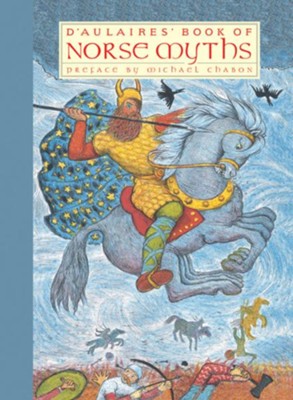
I happened to listen to this book rather than read it.  Listeners are in luck, as Gaiman narrates the book himself.  I typically appreciate it when an author narrates his/her own work as it really preserves the writer's voice in a way that might be lost in translation with a different reader.  Whether you read it or listen to it, Gaiman's voice is present throughout in a playful way, particularly in his telling of the story of Loki at Skadi's wedding.  Tasked with making the bride (Skadi) laugh, Loki does one of the dumbest things imaginable: he ties his balls to the beard of a goat.  It goes about how you think it would go and, yes, Skadi laughs.  (As do we all, Skadi.  As do we all.)  Incidentally, the D'Aulaires deftly skirt this more graphic story in their Book of Norse Myths by simply stating that Loki "tied himself to its [the goat's] beard".  There is no mention of genitalia, making this version more suitable for younger children...although mine roared with laughter at the mention of Loki's twig and berries.


Norse Mythology is an excellent retelling of some of the greatest stories to transcend time.  Neil Gaiman certainly doesn't disappoint as he calls upon readers to make the stories their own by retelling them to those who would listen.  (What a lovely thought!)  My one and only complaint about his retelling of Norse myths is that Gaiman doesn't spend nearly enough time on Freya's cats.  I can only assume he is presently working on the sequel, detailing the importance of these majestic floofs.

D'Aulaires' Book of Norse Myths, by Ingri and Edgar Parin D'Aulaire

NOTE:  I wrote this post MONTHS ago but, for some reason, it never got published.  So, I suppose it makes sense in tandem with the review that I am presently writing on Neil Gaiman's Norse Mythology.

Hooray!  It finally arrived!

Returning readers may recall (Ooo!  Alliteration!) my deep and abiding love for Greek mythology, owed almost entirely to a childhood babysitter and this book that I wrote about back in April (2023):

When I finally purchased my own copy -decades later in life- I learned that the D'Aulaires had co-written/illustrated even more world myths.  While I have a solid handle on Greek mythology, I do enjoy branching out and learning about the legends, folklore, myths, and fairy tales that come from other parts of the world.  Over the years, I have enjoyed a vague familiarity with Norse mythology, but I haven't spent nearly as much time with the pantheon of old-timey Scandinavia.

Until now.


No matter which way you look at it, the Olympians of ancient Greece are assholes.  Truly.  There isn't one among them without the stain of atrocity on his/her sleeve.  They are absolute train wrecks.  Imagine your most unstable relative - you know, the one who always blows up at holiday celebrations and ends up yelling at the kids.  Now imagine that relative is immortal and has unlimited power and drinks too much and exists in a dozen different beings.

Welcome to Mount Olympus.

The Norse gods are, for all their faults, slightly different.  They have immensely long lives, but know that their days are numbered.  They are discombobulated, unorganized, misogynistic (although somewhat less so than their Greek counterparts), and waaaay too into war (Excuse me, sir, do you have time to talk about Valhalla?), but they know that Ragnarok is pending and they want to get their shit together before it comes.  

Like their Olympian cousins, however, the Aesir are one hot mess.  (And so are the Vanir -a separate but related tribe/grouping of Norse gods- although I'd argue they are nutters to a moderately lesser degree.)  They fight with and deceive one another, but they share an overall goal for themselves and vision for humanity.  They seem a little more human than the Olympians, even though they are sometimes actual animals/monsters (literally -not figuratively- speaking).

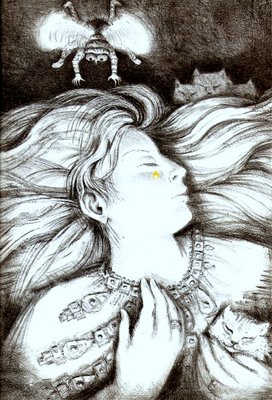
From the entirety of both the Greek and Norse pantheons, however, one deity rises high above the rest.  Say what you will about her "profession" as the Norse goddess of love, beauty, fertility (also war, death, magic, lust, gold, according to other sources), Freya is BY FAR THE BEST OF THE BEST.  Here is why:


Do you see that?  In case you missed it, let me point it out again:


OK, one more time, just to be sure (Freya is just to the right of center):


Freya seems to be almost synonymous with HER CATS.  For this reason -and this reason alone- I want her to be my best friend.  Why is she always depicted with cats?  Scroll back up to the first image and you'll see something that only a divine being could do.  Freya's chariot/sled is pulled by cats.  Not huskies, not horses, not reindeer or donkeys or even Thor's famed goats.  Cats.  Say it again with me:  CATS.  The best part is that this isn't even the D'Aulaires taking some artistic license.  Since her inception, this honorary Aesir (originally one of the Vanir) has been chauffeured by cats.  Google it.

Loki is weird.  Thor is hilariously oafish.  Odin thinks he's sneaky (he's not).  No doubt about it, this pile of goons and faulty deities are laughable and wonderful in their own right.  I'm not sure who would win in a battle of the Olympians versus the Aesir (+/- Vanir), but I do know one thing:  Freya and her cats will ALWAYS win in my book.  And my kids agree, because science has indisputably proven the following:

Cats > Everything else


June 11, 2023

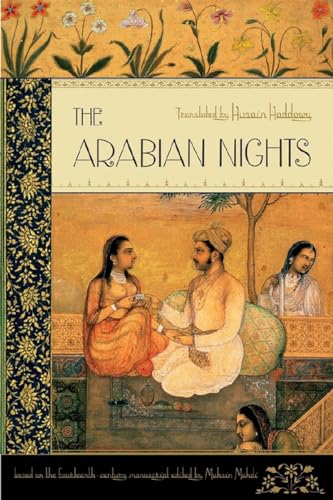
The Arabian Nights (Alf Layla wa Layla), Translated by Husain Haddawy

The Arabian Nights.  The Thousand and One Nights.  One Thousand and One Arabian Nights.  All of these titles serve as names for the fluid collection of Middle Eastern stories and folktales set in the framing narrative of storyteller Shahrazad to her husband, the king.

But let's back up a mo'.

Long, long ago (this is fictional), King Shahrayar got mad because his beloved wife cheated on him.  He was such a wreck afterwards that, not only did he have his wife and her lover maimed and killed, but he vowed to continue the bloodbath.  Every night, he married a new girl, bumped uglies with her, and killed her in the morning because EWWWWW!  Girls are the WORST!!!!

His vizier was...conflicted.  You see, contradicting a monarch in the Middle Ages anywhere was basically a death sentence, but perhaps most especially in this part of the world.  The king had had such a tantrum over his wife's infidelity that he took it out on other -innocent- women every.single.day.  It was just part of his journey.  


Indeed, for the vizier to suggest some alternate form of frustration relief would have been risky...and he was a fan of his own head.  Still, the vizier didn't like murdering innocent women and girls as part of his daily routine.  But it wasn't until his own daughter made a suggestion that he was willing to do anything about it.  Enter Shahrazad.

Shahrazad (often transliterated Scheherazade) was the eldest daughter of the vizier and she had an idea.  A bright, intelligent, and clever girl, she proposed to her father that she marry the king.  "QUOI?!?!?!?!?!  Hard pass", said her dad, the vizier.  No daughter of his was going to end up headless in the morning.  But Shahrazad was persistent and insisted that she had a plan.  Finally, her father reluctantly gave in, and granted her permission to marry the king.  The king, confused by this turn of events, consented.  His plans to kill her in the morning didn't change -and he made sure the vizier knew that- but he was curious to see where this whole thing was going.

After their wedding night festivities, Shahrazad began to cry.  Upon asking her why she was crying (for real) the king learned that his newly doomed wife had a younger sister, Dinarzad, whom she wished to see once more before dying in the morning.  So, King Shahrayar sent for Dinarzad to join them in the royal chambers.  I mean, he was a He-Man Woman-Hater, not a monster.

After the "king had satisfied himself with her sister Shahrazad" (ew), Dinarzad awkwardly cleared her throat and suggested that Shahrazad tell one of her "lovely little tales to while away the night".  She was, of course, not suggesting that her older sister tell campfire stories on the eve of her premeditated murder, but sticking to Shahrazad's well laid out plan.  You see, Shahrazad was a great storyteller...and King Shahrayar loved story time even more than he hated women.  Each night brought a new cliffhanger, so the king simply couldn't kill Shahrazad the next day or he'd never find out what happened next!  This went on night after night, week after week, month after month...until the king finally grew to love Shahrazad and agreed not to kill her.  Marital bliss.

It is this framing narrative that sets up every one of The Arabian Nights.  Stories within stories within stories within a framing narrative (another story) often require a little bit of focus to keep everything and everyone straight.  It's like the Middle Eastern folklore version of Inception.  While there are technically only 271 nights in my translation (which is about standard), the notion of 1,001 nights is actually more of a colloquialism in the Arabic language, the number 1,000 often being used to represent an infinite number (of nights/stories, in this case).  I was relieved when I learned this little factoid because (1) I couldn't find any translations that had 1,000+ nights and (2) I didn't want to read that many.  The 271 nights that I do have amount to over 500 pages, which was honestly enough for me.

In my research on this collection of stories, I learned a lot of other things, too.  For instance, many of the stories that we associate with The Arabian Nights (Alf Layla wa Layla, in Arabic) are not actually part of the original texts.  The thing about The Arabian Nights is that they are almost as flexible as the Arthurian Legends or stories of Robin Hood.  To find an "authentic original" is almost impossible as stories have been added and subtracted over the course of centuries.  In fact, the well-known stories of Sinbad the Sailor, Ali Baba and the Forty Thieves, and Aladdin were all added at later dates, some by European translators.  While the tales Sinbad, Ali Baba, and Aladdin are all equally of Middle Eastern origin, they were not part of the earliest iterations of The Arabian Nights.  For more on various translations, titles, and general information, check out this very thorough article: The Thousand and One Nights, Monica Mishra.

The translation I chose was by Husain Haddawy (copyright 1990), based on the fourteenth-century manuscript edited by Muhsin Mahdi.  The Mahdi manuscript seems to be something of a gold standard among variations, but that's just based on my own amateur observations.  Regardless, Haddawy's translation of this work is accessible and includes a very informative introduction by the translator about the evolution of the texts, manuscripts, and translations over the course of time.  It also includes a handy map of the world of The Arabian Nights, that covers territory spanning from modern day Egypt to China.


The Arabian Nights are, in many ways, surprising.  Prior to reading this translation, I had read a (very cleaned up!) children's version to my own kids a few years ago.  What I didn't realize is how graphic, violent, raunchy, and racist the original texts were.  While I wasn't surprised by the misogyny ("a woman needs either a husband or a tomb" -- or something like that), racism, and violence (they are of their time...), the sexual exploits and the ableism of the stories did leave me with my mouth agape.  But the 13-year-old in me laughed wildly at the poop and penis jokes, while simultaneously cringing at the villagers openly mocking and bullying the poor hunchback.

Ultimately, The Arabian Nights transported me to A Whole New World (sorry, couldn't help it) of magic, fantasy, and some weird-ass shit.  I laughed out loud, often having then to explain myself to others in the room; I winced at some of the ways the writers of these texts viewed the world; I rolled my eyes when "lovers" who knew each other for three hours had "affairs" (read: they looked at each other).  But I had fun and, even if you don't read The Arabian Nights in their entirety, I would recommend reading at least a few of them as stand-alone stories.  They are weird AF, but perhaps not as weird as the realities we experience every day.

April 11, 2023

D'Aulaires’ Book of Greek Myths, by Ingri and Edgar Parin d'Aulaire

I finally did it.  I got my hands on a hard copy of D'Aulaires’ Book of Greek Myths.  Actually, it's very accessible and readily available on Amazon; I just had to apply my powers of recollection to track it down.  Regular readers may recall that I mentioned this beautifully illustrated collection of Greek mythology in a previous post on Celtic Mythology for Kids (Pinard).  In that post, I mentioned my childhood babysitter Majel and how she sparked within me a deep love for Greek mythology.  This year, I was able to truly share that love with my own kids who begged me so often to tell them these stories that I found the most obvious solution that I ought to have come up with much sooner:  buy them this book.

The original publication of this book featured a bright yellow cover.

The modern publication features the same image on a black background.

Despite a few aesthetic changes to the cover, I found a paperback edition of this 1962 publication of retellings and illustrations by husband and wife duo Ingri and Edgar Parin d'Aulaire.  The 2017 copy that we now own features all of the gorgeous original illustrations along with an Afterword that includes biographical information about the authors/illustrators, along with some of their original sketches.  After being prodded daily to read from this book, I'd say we got our money's worth.  The retellings are accurate (from my understanding of the ancient myths) without being too graphic or explicit.  It's safe to say that Zeus was a ladies' man...but that consent from the other party wasn't exactly a requirement in his "relationships".  The d'Aulaires still share some of the darker aspects of mythology (think: Oedipus, Persephone, or -my personal favorite- Prometheus), but in a way that I would consider age appropriate.  While stating that Zeus "had a lot of wives" or "many children with women other than Hera [his main wife]" isn't the entire picture, it's enough for young readers.

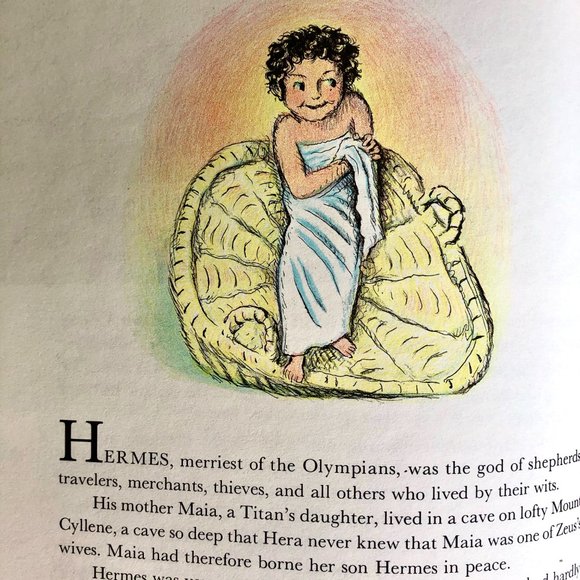
Kids will loves the story of Hermes, one of the few characters of the Greek pantheon we meet as a baby.  Clever, witty, and full of mischief, even the most austere of the Olympians are fond of him -- and so are we.  Pan, the ugly god of nature is reminiscent of SNL's "goat boy".  As unlikely as it sounds, Pan and the Olympian Apollo are equally unlucky in love as the objects of their desire (Syrinx and Daphne, respectively) opt to turn into plants rather than marry them -- an aspect of the story that my kids found wildly amusing.  And, despite its dark(ish) end, isn't it kinda funny that Narcissus wastes away and dies because he falls so deeply in love with his own reflection that he forgets to eat or drink?  Well, we thought so.  Dumb ol' King Midas turning his family into gold wasn't enough; he had to go make a big deal out of a music competition and ended up with donkey ears.  (Read it.  It makes sense.)  His ultimate demise recalls the story of Abou Hassan from One Thousand and One Nights.  [Quick Context Comparison:  King Midas is so ashamed by his donkey ears that he leaves his throne and flees to the woods.  Abou Hassan is a wealthy merchant who, at his elaborate wedding feast, lets out such a huge fart that he flees the country -leaving his beautiful new wife- for ten years on account of his embarrassment.]

Naughty baby Hermes is perhaps one of our family favorites.

The stories of ancient Greece are great.  Weird, often disturbing, and usually gross...but somehow great.  But it isn't just this fabulous publication that makes these stories as much fun as they are.  For me, there is a great deal of nostalgia involved.  Better yet, I get to share that with my kids now.  They crave these stories for their action and excitement.  We currently are loving a children's podcast called Greeking Out (National Geographic), where many of the same stories are told in different ways for kids.  My daughter loves listening to the tales of Atalanta and the wars between the Olympians and the Titans on repeat.  My son delights in the ingenuity of the Trojan horse. 

My oldest -ever the creator- made a family tree for the main Olympians
(and a few of their Titan ancestors).


There is truly nothing like getting to share great literature with the people you love most.  So we have this adventure on order...


March 19, 2023

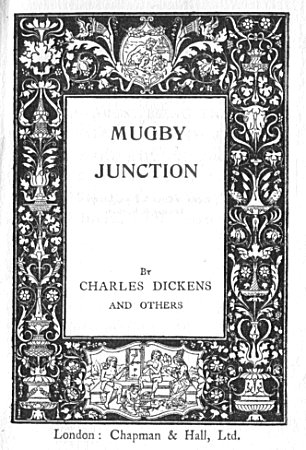
Mugby Junction, by Charles Dickens (et al)

Charles Dickens is, without a doubt, one of my most favorite authors.  As a child, my family went annually to our local community theater's production of A Christmas Carol and, long before I could fully understand this performance in its entirety, I found myself mesmerized by the sumptuous costumes, the props, the sets, the music...  It was just so damn sparkly.

Fast forward a few years and I was required to read A Tale of Two Cities in English class.  At the time, Dickens's writing was quite challenging for me, but I was still pulled in by the story itself, by the characters.  Later in life, I found myself pulled back again and again to works by ol' Boz.  I finally read A Christmas Carol (and had since seen dozens of iterations of the well-loved story in movies and on stage), but I'd added numerous other works including Bleak House, The Cricket on the Hearth, and even one of my all-time favorite books Nicholas Nickleby.  Despite his sometimes formulaic writing (mysterious personages, surprise relations, blending both gothic and humorous themes), Charles Dickens is a master of beguiling characters from crotchety villains to underdog sidekicks to flawed heroes.  While his treatment of women and minorities is often flat, I find myself granting him more amnesty than I would a modern writer.  He is, after all, a 19th century male author in Victorian England.  Plus, he makes me laugh out loud.

Most recently, I picked up a copy of a lesser-known collaborative work led by Dickens.  Mugby Junction is a collection of eight short stories penned by five different authors.  Set around an English railroad junction/town, each story features a different character telling of his own connection to the railroad.  (Don't worry, you don't have to be into trains or anything.)  They are divided as follows:

MUGBY JUNCTION

Barbox Brothers (Parts I, II, III) - Charles Dickens
Barbox Brothers and Co. - Charles Dickens
Main Line (The Boy at Mugby) - Charles Dickens
No. 1 Branch Line (The Signal-Man) - Charles Dickens
No. 2 Branch Line (The Engine-Driver) - Andrew Halliday
No. 3 Branch Line (The Compensation House) - Charles Collins
No. 4 Branch Line (The Travelling Post Office) - Hesba Stretton
No. 5 Branch Line (The Engineer) - Amelia B. Edwards


The eight stories in this collection vary from heartwarming (Barbox Brothers and Co.) to humorous (The Boy at Mugby) to mysterious (The Compensation House)The Signal-Man is a ghostly account of a railroad line worker who doesn't know what to do when he realizes that a specter appears before him, foreshadowing the deaths of unknown strangers.  The Engine-Driver recounts his life as a working man that culminates in his current position as driver...and father.  In The Compensation House, a strange young man (aptly named Mr. Oswald Strange) is haunted by his past.  The Travelling Post Office features mistaken identities and espionage.  Two best friends find themselves at odds over a woman in The Engineer.  

While each of these stories brings a different type of intrigue to the proverbial table, I have chosen to highlight my two favorites: 

Main Line (The Boy at Mugby) is the firsthand account of an employee of the train station's refreshment room, arguably written as a scathing critique of such workers after Dickens's own embarrassing experience at a similar (and thinly veiled) place.  Allegedly, the proprietress of such an establishment treated Boz very rudely, so he exacted his revenge upon her in literary form.  (Love it.)  Anyone who has ever been the object of impolite service -be it at a restaurant, a doctor's office, or the DMV- can heartily relate.  I can't help but feel that it is for such individuals that this funny little story is intended.

The Boy at Mugby, Sol Eytinge Junior
1867

Barbox Brothers and Co. must be read in succession after Barbox Brothers (Parts I, II, III).  In Parts I, II, III, we are introduced to a character who has something of a tragic past, leaving him alone in the wide world.  Upon taking his retirement, he finds himself wanting to outrun his own pending birthday, so he hops on a train to nowhere.  He ends up stopping and staying at Mugby Junction for a short period, to reflect upon what his next move should be.  In Barbox Brothers and Co., we follow his progress with the individuals he meets in Mugby Junction and how, after decades of loneliness and routine solitude, he makes a new life for himself.  I won't say more so I don't spoil it too much, but suffice it to say you'll feel warm fuzzies at the conclusion.

Available for free in the public domain, Mugby Junction makes for a great travel read.  (Otherwise, you can get it for a steal on Amazon -- just make sure that you get an edition that includes all eight stories.)  Light, easy to follow, and broken up naturally into short stories, there really is no excuse not to read this little hidden gem.

https://www.gutenberg.org/files/27924/27924-h/27924-h.htm