Showing posts with label Short Story/Novella. Show all posts

May 2, 2025

Arsène Lupin: Gentleman-Cambrioleur (Gentleman-Burglar), by Maurice Leblanc

Bonjour, mes amis!  Autrefois, pendant cet hiver passé en fait, j'ai donné un cours de français où on lisait un roman ensemble:  Arsène Lupin: Gentleman-Cambrioleur.

Did you catch that?  Si oui - très bien, je vous félicite.  Sinon - well, don't worry about it. 😉

Translation:  Hello, my friends.  Awhile back, during this past winter actually, I taught a French class where we read a novel together:  Arsène Lupin: Gentleman-Burglar.


As both of you know, I am a French teacher.  I teach college/grad level content for an international (though non-accredited) institution, mainly for people who simply love to learn.  It's a great gig and I love my job.  We have three annual "school year" sessions that meet weekly and, during the Winter Session, I like to either read a novel or watch a TV series together, discussing various chapters/episodes each week in class.  At the request of a regular student of mine, we read this novel together - and it was a lot of fun!

For those of you not familiar with the character, Arsène Lupin is the star of his own series of short stories by Maurice Leblanc.  Set during the turn of the 20th century, Lupin is a criminal mastermind, a charming, rakish thief who makes his way around the world (usually Europe, but he comes to the US at least one time), mainly stealing jewels and baubles and money off of the wealthier classes.  Sometimes he is bested, but he always works his way out of it with his wit and a crew of faithful followers.  A master of disguise with a laundry list of aliases, Lupin has no shortage of tricks up his sleeve to change his appearance and identity, as he often does.

Maurice Leblanc penned his stories slightly after -and also contemporaneously with- the publication of stories starring another turn-of-the-century mastermind: Sherlock Holmes by Sir Arthur Conan Doyle.  In fact, Arsène Lupin crosses paths with a one "Herlock Sholmès" on occasion.  They are rather each other's opposites (one being a thief, the other a detective), but share a great deal in common (brilliant minds, a love for puzzles, bleeding narcissism).  Of course, as the creator of Arsène Lupin, author Maurice Leblanc favors his own brainchild and Lupin bests "Herlock".

While the stories certainly have a similar feel to those of Sherlock Holmes, the anti-hero reigns supreme here.  Some stories are humorous, others less so.  Lupin is definitely not a "good person", but he does have redeeming qualities and a backstory that elicits empathy from the reader.  He rather calls to mind the image of Hercule Flambeau from the BBC series Father Brown.  (From my understanding, the character of Flambeau is portrayed rather differently on the series from his original version in the G.K. Chesterton books of the same title.  Lupin reminds me somewhat of a younger version of the TV portrayal of Flambeau.)

Hercule Flambeau, Father Brown on BBC

The edition we read together in class was a dual-language one, featuring the original French text alongside its American-English translation.  We quickly learned that the translation was not spot on, much to our annoyance.  Still, for readers of a second language, having quick-access reference to translations can be useful as it does not disrupt the flow of reading as much as having to seek a dictionary translation would.

All in all, Arsène Lupin: Gentleman-Cambrioleur makes for a fun, escaping read.  It isn't high brow or particularly difficult, but fun all the same for lovers of the genre.

Bonne lecture!

January 29, 2025

2024 Wrap-Up: A record breaking 7-in-1 post

 I got lazy toward the end of 2024.  Part of it was that I had surgery in October, then still did all the usual year-end things...and I was just tired.  Being laid up, however, provided ample time for reading -- so read I did.  Because I am barraging you with seven new titles, I decided to group them by category.  You know how I love categories.

CHILDREN'S NOVELS

My daughter is always complaining about having "nothing to read" (false).  As a result, I have gone back into the deep recesses of my memory to dig up some of the books that I read and enjoyed around her age (give or take a couple of years).  Here are a couple that she read -and I re-read- in the final weeks of 2024.

Stepping on the Cracks, Mary Downing Hahn

I was fortunate as a child to have an older sister who was an avid reader.  This meant that she would often read books and then suggest the good ones to me, essentially weeding out the boring shit.  Stepping on the Cracks was one such "good book" that she recommended to me when we were kids.


The story is set stateside during WWII.  Two young girls -best friends Margaret and Elizabeth- both have older brothers fighting overseas, and know firsthand how war can affect a family.  Still, they are pre-teenage girls and war certainly doesn't occupy all of their thoughts.  In fact, the merciless sixth grade bully Gordy Smith and his cronies are more prevalent in their day-to-day lives.  In a scheme to exact revenge upon Gordy and his friends for their latest antics, Margaret and Elizabeth make a startling discovery that will change the way they think of their neighborhood as well as the world -and the war- around them.

Stepping on the Cracks is a simple but poignant coming-of-age story.  While most of us didn't live through WWII, we can relate to the youthful goings-on of the protagonists.  Re-reading this book as an adult was no less exciting, but certainly afforded me the opportunity to experience it through a different lens.  As an adult and a mom, I related to characters that I hadn't previously considered.  Well worth the re-read.

Cat Running, Zilpha Keatley Snyder

Another period-piece-lessons-learned novel that both my daughter and I enjoyed is Cat Running.  This story, set in California during the 1930s, features another sixth grade girl as the main protagonist.  Cat Kinsey is frustrated by her traditional parents -specifically her father- who will not allow her to "wear slacks" like the other girls at school.  It's not just the mandatory dresses that annoy Cat, but the fact that she is a very talented runner and wants so badly to defend her title in the school's annual running/track competition...but being unable to dress in a way that is conducive to her goals (and being a tweenage girl with an out-of-touch parent) makes that extremely difficult and frustrating.


As a salve to her rage, Cat discovers a strange little hideout in the rocky cliffs beyond her family's property.  As she sets up shop in her new secret place, she discovers that she is not the only one who frequents it...and a strange new friendship develops that might just change her life.  Fun, informative, and thought-provoking, Cat Running is a great story for the junior reader in your life.

MURDER MYSTERIES (A.K.A. "HOT DOG BOOKS")

Y'all, I'd be remiss if I didn't have at least one (or three) murder mysteries in my 7-in-1 post.  They need no introduction, so I'll just get started...

Miss Morton and the Deadly Inheritance, Catherine Lloyd

Devotees (ha!) will recall a series that I began in 2023: the Miss Morton books by Catherine Lloyd.  Deadly Inheritance is the third book in this series and follows the same format as the first two:  Miss Morton and the English House Party Murder and Miss Morton and the Spirits of the Underworld.  Honestly, I don't feel like it merits a full review because it's just the same formula.  It's predictable, fun, and I don't care what you say, I'm going to keep reading them.


Death Comes to the Village, Catherine Lloyd

Prior to the Miss Morton books, Catherine Lloyd penned a series of Death Comes to ____ books, featuring a practical, similarly minded leading lady:  Lucy Harrington.  Once again, "devotees" (double ha!) will recall that I began this series back in 2023, but unknowingly started with #3 of an eight book series.  (Previously read: #3 Death Comes to Kurland Hall and #4 Death Comes to the Fair.)  Since I've been doing a lot of hot dog reading in my convalescence (gearing up for another surgery next week...), I figured I ought to go back and start this series from the beginning with #1 Death Comes to the Village, and work my way through this series (skipping #3 and #4).  So far, same song and dance: fun, mindless, love mine with mustard and relish.


Vera Wong's Unsolicited Advice for Murderers, by Jesse Q. Sutanto

In a surprising turn of events, I left England's murdery countryside and landed in present day San Fran's Chinatown.  Stereotypical tiger mom Vera Wong runs a little tea house where nothing exciting happens...until one day, a man's body is discovered right in the middle of her shop.  Of course, the police department isn't up to snuff, so Vera must take over the investigation herself so that things will be done correctly.  As she continues her detective work, Vera finds herself cozying up to a laundry list of suspects, all people who knew the deceased.  What she doesn't expect is to find herself caring deeply for these people, their lives, and their well-being.


My husband and I listened to this book together (vs reading it in print) and, let me just say, we fully enjoyed it.  It was funny, suspenseful, and heartwarming -- a rare combination.  I would recommend Vera Wong to anyone who might enjoy a fun escape, particularly accompanied by a good cup of Chinese tea.  (Bonus:  Vera will be back in another novel set to release in March!)

MISCELLANEOUS (FANTASY + SHORT STORY)

The final two entries for this post fall into two separate categories.

Taliesin, by Stephen Lawhead

Last year, I listened to a Stephen Lawhead book In the Hall of the Dragon KingIt was OK, kinda contrived, not my favorite.  Still, I mentioned in that review how I wanted to try another couple of Lawhead's books/series, so I did.  Taliesin is the first in The Pendragon Cycle, a series featuring a cast of Arthurian characters.  


An epic build up to what is certain to be quite the universe, Taliesin spans perhaps an entire continent between Atlantis (a kingdom in its twilight) and a post-Roman Celtic world (that sounds a lot like Wales) that is on the rise.  Worlds collide, characters meet, years pass, and loved ones are lost or changed.  It's all the things that a fantasy prequel promise to be.  Nevertheless, I did find a lot of contrived action similar to that which I detailed in my review of Dragon King.  There were elements that were simply too forced for my liking, as well as a lot of "by the way" information crowded into the final chapters.  While it wasn't a bad read, per se, I will not be likely to pick up the second book in the series.  

The Turbulence Expert (from You Like It Darker), by Stephen King

My husband is a long time fan of Stephen King.  In fact, I believe he has read everything the guy has written.  (If not, it's pretty damn close.)  One of King's latest publications is a series of short stories in the book You Like It Darker.  


My husband hates flying; he hates heights.  As such, he related a great deal to the main character in the short story The Turbulence Expert from this collection and prompted me to read it, since I know these details about him.  Without divulging too much, the main character in the story shares my husband's fears, making him a perfect fit for a (fictional???) job as a "turbulence expert".  And that is all I'll say.  A fun and eerie read that will take you only a matter of minutes.


And that concludes 2024!  I've already made considerable progress in 2025 and am about to wrap my fourth book.  I will probably be back to review throughout the year, but I make no promises at this time!

HAPPY READING!!!


June 15, 2024

Morse's Greatest Mystery and Other Stories, by Colin Dexter

 Remember how much I love British murder mysteries?  I really don't know what it is.  They just remind me of the game of Clue, and how much fun I had playing that as a kid.  I used to take the weapons from the board game and use them with my Barbies, creating Malibu murder mysteries.

It was SKIPPER in the DREAM HOUSE SALON with the CANDLESTICK!!!!

Anyway...

About six or seven years ago, I was really into the series Father Brown.  I enjoyed the 1950s English vicar solving mysteries with his little team of rag tag villagers.  Once the series got pulled from Netflix, a friend of mine with a similar bent for the preposterously posh introduced me to the Masterpiece series, Endeavour.  Older episodes were available on Prime at that point, with new ones being released on PBS.  She and I watched this show religiously for the next several years, until the series finale last summer.

For those of you who are familiar with Endeavour, you are aware that it is a precursor to the equally British series Inspector Morse of the 1980s-1990s.  Both shows follow the character Endeavour Morse throughout various points in his career (Detective Constable, Detective Sergeant, Detective Inspector...).  Endeavour begins in 1965 with a 20-something Morse as a Detective Constable in Oxford.  Not your typical policeman, Morse is something of a brain, having been an Oxford student during his troubled past.  Amazing at solving puzzles and riddles, Morse also favors the classics and is a big opera nut.  To balance this out, he is also an on-and-off heavy drinker, has a passion for fast cars (eventually leading to his trademark Jaguar), and self-destructive behaviors.  As a prequel, Endeavour endeavors (see what I did there?) to set the backstory for the Inspector Morse known to fans of the show that peaked in the 90s.

Endeavour Morse and Inspector Fred Thursday, Endeavour (2012-2023)
Setting: Oxford England, 1960s-1970s

Endeavour Morse, Inspector Morse (1987-2000)
Setting: Oxford England, contemporary (1980s-1990s)


But we are getting ahead of ourselves!  BOTH of these successful television shows are based on characters created by mystery writer Colin Dexter.  In fact, Mr. Dexter was instrumental in the creation of Endeavour as a show, even making a cameo appearance in an early episode.  (I am uncertain as to his involvement in the Inspector Morse series, but I imagine he had a hand.)  His contributions to Endeavour undoubtedly lent authenticity and continuity to the titular character and, as any fan loyal to a longstanding show coming to an end can understand, I wanted more of these characters I'd grown to love.

What better way to do that than to go straight to the source?!  This seemed like a good place to start:


This collection of short stories by Colin Dexter was available on Libby.  It did take me some time to adapt to Frederick Davidson's readings of the stories, as I found him moderately difficult to understand without concerted effort and concentration.  Once I made that aural adjustment, I was able to follow with ease.

I was surprised, however, at how many stories did not feature Morse or his cast of Oxford colleagues.  There were several non-Morse stories, including even a Sherlock Holmes piece.  I was confused by this, given the title of the book, and eventually just had to accept it as a collection of mysteries by Colin Dexter...with some Morse involvement.

Of those stories that did include Morse (just a few), I was surprised to find him featured as more of a background character:  the older Inspector Morse, not the younger DC/DS Morse that I had come to know over the years.  The stories in which he did appear -still his lovably bitter, prickly self- usually centered around his subordinates and co-workers, which I found disappointing.  I checked this book out, after all, because of Morse!

To be honest, I found this book mostly forgettable.  I read it a couple of months ago and am just now getting around to the review.  (The kids are out of school and, while I'm still doing a lot of reading, I'm not getting to much writing time.)  I'm struggling to remember many details about it, but I do recall feeling rather "meh" about the collection of stories.  They made for good, diverting entertainment, but not something that will stay with me for years to come like the TV show.

Morse ultimately meets with a terribly tragic end.  In fact, his entire life is one self-inflicted tragedy after another.  Yet you can't help but like the guy.  Sure, he's growly and condescending, but he has a good heart.  Even though I didn't necessarily love this collection of stories by Colin Dexter, I do love the characters that he created.  For this reason, I will probably pick up another Morse book in the future.


March 19, 2023

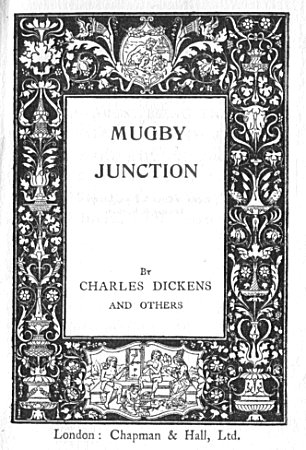
Mugby Junction, by Charles Dickens (et al)

Charles Dickens is, without a doubt, one of my most favorite authors.  As a child, my family went annually to our local community theater's production of A Christmas Carol and, long before I could fully understand this performance in its entirety, I found myself mesmerized by the sumptuous costumes, the props, the sets, the music...  It was just so damn sparkly.

Fast forward a few years and I was required to read A Tale of Two Cities in English class.  At the time, Dickens's writing was quite challenging for me, but I was still pulled in by the story itself, by the characters.  Later in life, I found myself pulled back again and again to works by ol' Boz.  I finally read A Christmas Carol (and had since seen dozens of iterations of the well-loved story in movies and on stage), but I'd added numerous other works including Bleak House, The Cricket on the Hearth, and even one of my all-time favorite books Nicholas Nickleby.  Despite his sometimes formulaic writing (mysterious personages, surprise relations, blending both gothic and humorous themes), Charles Dickens is a master of beguiling characters from crotchety villains to underdog sidekicks to flawed heroes.  While his treatment of women and minorities is often flat, I find myself granting him more amnesty than I would a modern writer.  He is, after all, a 19th century male author in Victorian England.  Plus, he makes me laugh out loud.

Most recently, I picked up a copy of a lesser-known collaborative work led by Dickens.  Mugby Junction is a collection of eight short stories penned by five different authors.  Set around an English railroad junction/town, each story features a different character telling of his own connection to the railroad.  (Don't worry, you don't have to be into trains or anything.)  They are divided as follows:

MUGBY JUNCTION

Barbox Brothers (Parts I, II, III) - Charles Dickens
Barbox Brothers and Co. - Charles Dickens
Main Line (The Boy at Mugby) - Charles Dickens
No. 1 Branch Line (The Signal-Man) - Charles Dickens
No. 2 Branch Line (The Engine-Driver) - Andrew Halliday
No. 3 Branch Line (The Compensation House) - Charles Collins
No. 4 Branch Line (The Travelling Post Office) - Hesba Stretton
No. 5 Branch Line (The Engineer) - Amelia B. Edwards


The eight stories in this collection vary from heartwarming (Barbox Brothers and Co.) to humorous (The Boy at Mugby) to mysterious (The Compensation House)The Signal-Man is a ghostly account of a railroad line worker who doesn't know what to do when he realizes that a specter appears before him, foreshadowing the deaths of unknown strangers.  The Engine-Driver recounts his life as a working man that culminates in his current position as driver...and father.  In The Compensation House, a strange young man (aptly named Mr. Oswald Strange) is haunted by his past.  The Travelling Post Office features mistaken identities and espionage.  Two best friends find themselves at odds over a woman in The Engineer.  

While each of these stories brings a different type of intrigue to the proverbial table, I have chosen to highlight my two favorites: 

Main Line (The Boy at Mugby) is the firsthand account of an employee of the train station's refreshment room, arguably written as a scathing critique of such workers after Dickens's own embarrassing experience at a similar (and thinly veiled) place.  Allegedly, the proprietress of such an establishment treated Boz very rudely, so he exacted his revenge upon her in literary form.  (Love it.)  Anyone who has ever been the object of impolite service -be it at a restaurant, a doctor's office, or the DMV- can heartily relate.  I can't help but feel that it is for such individuals that this funny little story is intended.

The Boy at Mugby, Sol Eytinge Junior
1867

Barbox Brothers and Co. must be read in succession after Barbox Brothers (Parts I, II, III).  In Parts I, II, III, we are introduced to a character who has something of a tragic past, leaving him alone in the wide world.  Upon taking his retirement, he finds himself wanting to outrun his own pending birthday, so he hops on a train to nowhere.  He ends up stopping and staying at Mugby Junction for a short period, to reflect upon what his next move should be.  In Barbox Brothers and Co., we follow his progress with the individuals he meets in Mugby Junction and how, after decades of loneliness and routine solitude, he makes a new life for himself.  I won't say more so I don't spoil it too much, but suffice it to say you'll feel warm fuzzies at the conclusion.

Available for free in the public domain, Mugby Junction makes for a great travel read.  (Otherwise, you can get it for a steal on Amazon -- just make sure that you get an edition that includes all eight stories.)  Light, easy to follow, and broken up naturally into short stories, there really is no excuse not to read this little hidden gem.

https://www.gutenberg.org/files/27924/27924-h/27924-h.htm